
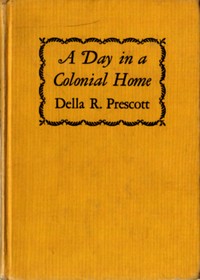
A Day in a Colonial Home by Della R. Prescott
Forget the powdered wigs and stuffy portraits for a minute. A Day in a Colonial Home does something brilliant: it hits pause on history and zooms in on the heartbeat of everyday life. Della R. Prescott doesn't give us a sweeping saga; she gives us a single, sun-up to sun-down slice of life for a family in early America.
The Story
The book walks us through the rhythms of a typical day for a colonial family, likely in New England. We start in the cold, pre-dawn dark as the mother rises first to rebuild the kitchen fire. We follow the children as they do their chores—fetching water, feeding animals, carding wool—before any thought of play. We see the father and older sons at work in the fields or the workshop, where every tool and item has a story and a purpose. Every meal is an event, prepared from scratch. As evening falls, activities shift to the firelight: mending, whittling, perhaps a little reading if the family is lucky. The 'plot' is the successful completion of the day itself—the survival and small victories that kept a home and a community running.
Why You Should Read It
What I loved most was how this book humanizes the past. These aren't just names in a textbook; they're a mom trying to keep her kids clean, a dad teaching his son a craft, and kids sneaking a moment of fun between chores. Prescott fills the pages with fascinating details that make you think. You'll gain a new appreciation for simple things like a loaf of bread (which took hours to make from grain to table) or a clean shirt (washed, dried, and ironed through sheer physical labor). It quietly shows how self-sufficient and resourceful people had to be, which gives you a whole new respect for the era. It's less about memorizing dates and more about understanding a mindset.
Final Verdict
This is a perfect, quick read for anyone curious about social history or how people really lived. It's great for fans of historical fiction who want a solid foundation of truth, for parents or teachers looking to make history tangible for kids, and for anyone who enjoys those 'living history' museums. If you find big history books dry, this focused, personal approach will feel like a breath of fresh air. It's a small book that leaves a big impression, reminding us that history is built not just on ideas, but on millions of ordinary, hard-working days just like this one.
This content is free to share and distribute. You do not need permission to reproduce this work.
Sarah Taylor
1 year agoFast paced, good book.
Anthony Johnson
7 months agoThis is one of those stories where it challenges the reader's perspective in an intellectual way. Thanks for sharing this review.
Amanda Gonzalez
3 months agoFast paced, good book.



Thomas Lee
4 months agoGreat reference material for my coursework.