
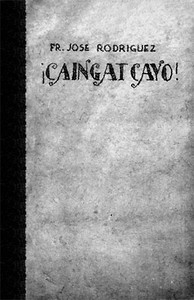
¡Caiñgat Cayo! by Fr. José Rodriguez
Let's set the scene. It's 1889, and the Philippines is under Spanish rule. A young man named José Rizal has just published a novel called Noli Me Tangere back in Europe. It's a fierce critique of the Spanish friars and colonial society. The book starts circulating, and it's a big deal.
The Story
¡Caiñgat Cayo! is the immediate, furious reaction from the other side. Written by Fr. José Rodriguez, it's not a story with characters in the usual sense. Think of it as a long, public sermon or a warning pamphlet. Its main 'character' is Rizal's novel itself, which Rodriguez sees as a grave threat. The title translates roughly to 'Beware!' or 'Be on Your Guard!'
The book directly attacks Rizal's ideas page by page. Rodriguez argues that Noli Me Tangere is full of lies, blasphemy, and dangerous propaganda that will lead Filipinos astray from both Spain and the Catholic Church. He tries to discredit Rizal personally and intellectually. The central conflict is pure ideology: the established colonial and religious order versus the new, rising call for reform and national awareness.
Why You Should Read It
Here's what makes it fascinating: you get to witness history's argument in real time. Reading Rizal's novel gives you one perspective. Reading Rodriguez's frantic response gives you the other. You feel the tension, the fear, and the high stakes. It shows just how powerful Rizal's writing was—powerful enough to make the authorities scramble to publish a whole book trying to shut it down.
It's also a stark lesson in how those in power try to control narratives. Rodriguez isn't just criticizing; he's trying to build a wall between the people and new ideas. Seeing that process laid bare is chilling and incredibly relevant.
Final Verdict
This isn't a beach read. It's for the curious reader who wants to go deeper. Perfect for history buffs, students of Philippine culture, or anyone interested in how revolutions start in the mind before they reach the streets. Read it alongside Noli Me Tangere to have the complete, explosive conversation. It’s a crucial piece of the puzzle, offering the raw, unfiltered voice of a world that felt it was about to change forever.
This work has been identified as being free of known copyright restrictions. Feel free to use it for personal or commercial purposes.
John Hernandez
1 month agoA must-have for graduate-level students in this discipline.
Donald Moore
3 months agoInitially, I was looking for a specific answer, but the wealth of information provided exceeds the average market standard. Truly a masterpiece of digital educational material.
Sarah Thomas
6 months agoIt effectively synthesizes complex ideas into a coherent whole.
Joseph Anderson
1 month agoI stumbled upon this title during my weekend research and the historical context mentioned in the early chapters is quite enlightening. A refreshing and intellectually stimulating read.
Elizabeth Garcia
2 years agoI started reading this with a critical mind, the case studies and practical examples provided add immense value. I'm glad I chose this over the other alternatives.