
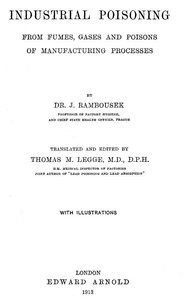
Industrial Poisoning from Fumes, Gases and Poisons of Manufacturing Processes
Let's be clear from the start: this is not a novel. There's no protagonist in the traditional sense, unless you count the author himself, Dr. Josef Rambousek, as he investigates. And the 'plot' is his systematic journey through the industrial landscape of his time.
The Story
Rambousek organizes his book like a grim encyclopedia of workplace hazards. Each chapter tackles a different industry or a specific group of poisonous substances. He describes, in clear and often unsettling detail, the processes that create danger—like the making of lead batteries, the vulcanization of rubber, or the use of phosphorus in matches. He then lays out the symptoms suffered by the workers: the palsies, the skin ulcers, the lung rot, the neurological damage. He isn't just listing problems; he's connecting the dots, showing how a specific chemical exposure leads directly to a specific human suffering. The narrative drive comes from following his process of discovery and documentation, building a powerful case that these illnesses aren't just 'part of the job'—they are preventable tragedies.
Why You Should Read It
What makes this book compelling is its startling humanity. You feel Rambousek's urgency. This isn't abstract science; it's a report from the front lines of the factory floor. When he describes a worker's chronic cough or a peculiar skin rash, you understand he's seen it with his own eyes. Reading it today is a profound experience. It's a stark reminder of how much we take for granted—things like workplace safety standards, ventilation, and protective equipment. This book sits at the very beginning of that fight. It’s foundational. You're witnessing the birth of modern occupational medicine. It makes you look at the everyday objects of our world—a simple match, a painted toy, a battery—and consider the hidden history of their making.
Final Verdict
This book is perfect for history buffs, especially those interested in the Industrial Revolution, social justice, or the history of medicine and public health. It's also great for anyone who enjoys true stories of investigation and discovery. While the subject is serious, Rambousek's direct style makes it surprisingly accessible. You don't need a science degree; you just need curiosity about the hidden costs of the modern world. Be prepared: it's not a light read, but it is an incredibly important and absorbing one. It will change the way you think about the air you breathe and the rights every worker deserves.
No rights are reserved for this publication. It serves as a testament to our shared literary heritage.
Steven Johnson
1 year agoTo be perfectly clear, the plot twists are genuinely surprising. I would gladly recommend this title.
Daniel Brown
1 year agoSimply put, the arguments are well-supported by credible references. Truly inspiring.



William Perez
10 months agoFast paced, good book.