
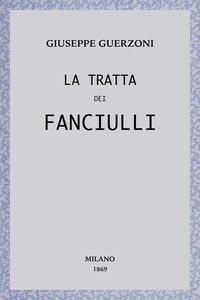
La tratta dei fanciulli : racconto sociale by Giuseppe Guerzoni
Let's talk about a book that feels less like a novel and more like a punch to the gut. Giuseppe Guerzoni's La tratta dei fanciulli (The Trafficking of Children) is a social exposé from 1873 that reads with the urgency of today's headlines.
The Story
The book doesn't have a single protagonist in the traditional sense. Instead, its main character is a brutal system. Guerzoni, a journalist and politician, documents the widespread practice of 'child trafficking' in post-unification Italy. Impoverished families in the south, often deceived by promises of good wages and care, would hand over their children to middlemen. These kids were then transported north to Lombardy and Piedmont, where they were sold to factory and mine owners as cheap, disposable labor.
We follow the journey of these children through Guerzoni's detailed reporting. He describes their long, horrific marches, the squalid conditions they lived in, and the dangerous, exhausting work they faced for 12-14 hours a day. The story is built on case studies and firsthand observations, painting a collective portrait of stolen childhoods in the name of industrial profit.
Why You Should Read It
You should read it because it shatters any pretty illusions about the past. This isn't a dry history lesson; it's a visceral account of human suffering that was hiding in plain sight. Guerzoni's anger and compassion bleed through every page. He doesn't just show you the problem—he points fingers at the authorities who allowed it and the economic forces that demanded it.
What got me was the chilling normality of it all. The way he describes contracts, transportation logistics, and the cold economic calculations makes the horror even more profound. It forces you to ask what injustices we might be blind to in our own time.
Final Verdict
This book is perfect for readers who love historical nonfiction that doesn't pull its punches, like the works of Erik Larson or Barbara W. Tuchman. It's essential for anyone interested in labor history, social justice, or the dark side of Italy's modernization. Be warned: it's a tough, sobering read. But it's also a powerful reminder of a writer who used his voice to defend the voiceless. A forgotten classic that deserves to be remembered.
You are viewing a work that belongs to the global public domain. Distribute this work to help spread literacy.
Richard Martin
1 year agoLooking at the bibliography alone, the practical checklists included are a great touch for real-world use. This exceeded my expectations in almost every way.
Ethan Ramirez
2 months agoAs someone who reads a lot, it provides a comprehensive overview perfect for everyone. I learned so much from this.
Jennifer Taylor
2 months agoMy professor recommended this, and I see why.
Christopher Jones
11 months agoHonestly, the depth of research presented here is truly commendable. I learned so much from this.





Barbara Moore
1 month agoI decided to give this a try based on a colleague's recommendation, the author’s unique perspective adds a fresh layer to the discussion. I'm glad I chose this over the other alternatives.