
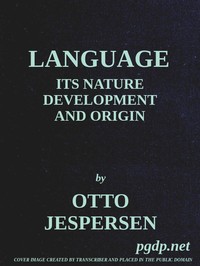
Language: Its Nature, Development and Origin by Otto Jespersen
This isn't a story with a plot in the traditional sense. Instead, Jespersen takes us on a journey through the life of language itself. He starts by looking at what language even is—how it's different from animal communication and what its core purpose is. Then, he goes back to the beginning, exploring theories about how language might have first started. From there, it's a grand tour through history. He shows how languages change over centuries, how sounds shift, grammar simplifies or complicates, and words are born and die. A big part of the book looks at how children learn language, which Jespersen saw as a key to understanding its true nature. He finishes by examining the forces that drive language change, from social trends and migration to sheer human laziness in pronunciation.
Why You Should Read It
What makes this old book so compelling is Jespersen's voice. He's not a neutral observer; he has strong, often charmingly old-fashioned opinions. He argues that languages tend to become more logical and efficient over time, which was a controversial idea. He loves pointing out the silly inconsistencies in English (why 'good' but 'better' and 'best'?) and celebrates the clever ways language adapts. Reading him, you get a real sense of a curious mind at work, piecing together a puzzle with the clues he had in the 1920s. It’s less about memorizing facts and more about watching a master thinker ask the right questions. You'll start noticing the hidden patterns and history in your own everyday speech.
Final Verdict
This book is perfect for word nerds, history lovers, and anyone who's ever been curious about why we talk the way we do. It's not a light read—Jespersen’s prose is clear but dense—so it's best for someone with a genuine interest in the topic. Think of it as the foundational text for a lot of modern ideas about language. You might not agree with all his conclusions (and some are definitely outdated), but you'll come away with a much deeper appreciation for the messy, brilliant, and ever-evolving tool we use every day. It’s a classic for a reason.
This text is dedicated to the public domain. Access is open to everyone around the world.
Sarah Lee
6 months agoExceptional clarity on a very complex subject.
John Moore
3 months agoI appreciate how this edition approaches the core problem, the way the author breaks down the core concepts is remarkably clear. The insights gained here are worth every minute of reading.
William Martinez
7 months agoThis was exactly the kind of deep dive I was searching for, the structural organization allows for quick referencing of key points. Highly recommended for those seeking credible information.
Christopher Nguyen
7 months agoVery interesting perspective.





Paul Miller
3 months agoBefore I started my latest project, I read this and the footnotes provide extra depth for those who want to dig deeper. A perfect balance of theory and practical advice.