
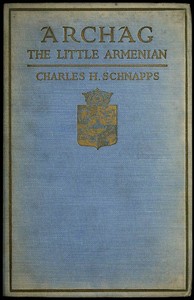
Archag, the Little Armenian by Charles H. Schnapps
I picked up Archag, the Little Armenian knowing it would be a serious read, but I wasn't prepared for how deeply this slim book would pull me in. Written in 1918, it's a story that feels both of its time and painfully timeless.
The Story
The book introduces us to Archag, a bright and curious boy living a simple, happy life with his family in his Armenian village. Schnapps paints a vivid picture of this world—the smells of his mother's cooking, the lessons from his father, the games with friends. This normalcy makes what comes next so much harder. The story shifts when a shadow falls over the region. Archag's family, along with their entire community, is forced from their home. The narrative becomes a journey of survival, following Archag as he witnesses unspeakable loss and endures a desperate flight to safety. It's the story of a childhood stolen, told from the ground level.
Why You Should Read It
This book works because it's so personal. We aren't reading about vast historical forces in the abstract; we're walking alongside one boy. You feel his confusion, his fear, and his resilient spark of hope. Archag isn't just a symbol; he feels real. Schnapps, writing so close to the events of the Armenian Genocide, channels that immediacy onto the page. The prose is straightforward, which somehow makes the events more devastating. It doesn't sensationalize; it simply shows. Reading it, I kept thinking about how history is made up of millions of individual stories like Archag's, stories that are too often overlooked.
Final Verdict
This is a vital, if challenging, read. It's perfect for anyone interested in historical fiction that focuses on human experience over political maneuvering. If you appreciated the personal scope of books like The Book Thief or All the Light We Cannot See, but want to explore a different historical tragedy, you'll connect with Archag's story. It's also a great pick for book clubs looking for a short but powerful discussion starter about resilience, memory, and the cost of conflict. Fair warning: it's heartbreaking. But it's the kind of heartbreak that fosters empathy and understanding, which is why this little book from 1918 still matters so much today.
Legal analysis indicates this work is in the public domain. You do not need permission to reproduce this work.
Kenneth Williams
1 year agoI didn't expect much, but the storytelling feels authentic and emotionally grounded. I would gladly recommend this title.
Nancy Harris
3 months agoWow.




Michelle Lee
1 year agoSurprisingly enough, the depth of research presented here is truly commendable. Don't hesitate to start reading.