
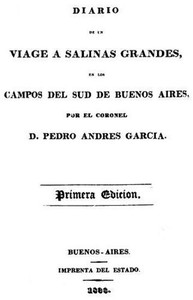
Diario de un viage a Salinas Grandes, en los campos del sud de Buenos Aires
Let's set the scene. It's 1810, and the world is turning upside down. Napoleon is stomping around Europe, and in Buenos Aires, people are starting to whisper about independence from Spain. In the middle of all this chaos, a seasoned military officer named Pedro Andrés García gets orders. He has to lead an expedition south, into the wild, unmapped plains, to a place called the Salinas Grandes—the 'Great Salt Flats.' His official mission: scout the land, map it, and come up with a plan to stop the Portuguese or anyone else from claiming it. But you can feel the unspoken question hanging over every page: Is this trip about securing land for Spain, or is it about gathering knowledge for a new nation that hasn't even been born yet?
The Story
This isn't a novel with a plot twist. It's a day-by-day account, and that's what makes it so gripping. You travel with García mile by painful mile. He writes about the crushing boredom of crossing featureless plains, the sudden terror of a storm, and the very real problem of finding water. The land itself is the first major character—harsh, beautiful, and indifferent. The second set of characters are the Indigenous peoples he meets, like the Ranqueles. These aren't just 'natives' in the background; they're savvy political players. García has to negotiate with them for guides, for safe passage, for information. You see the careful dance of diplomacy, the mutual suspicion, and moments of genuine connection. The 'conflict' isn't a battle; it's the quiet tension of trying to understand a world that operates by rules his European training never covered.
Why You Should Read It
I loved this book because it strips away all the hindsight. Reading it, you don't know Argentina will become a country. You're just with a guy doing a difficult job in a strange land. García is a surprisingly relatable guide. He's practical, often frustrated, and occasionally in awe of what he sees. His observations are sharp—from the way the salt cracks underfoot to the strategic thinking of a cacique (leader). The diary forces you to think about how borders are really made. Not by treaties in faraway capitals, but by journeys like this one, by who knows the trails and where the water is. It's a ground-level view of empire and exploration, with all the dust and doubt left in.
Final Verdict
Perfect for history buffs who are tired of the big-picture summaries and want to smell the horses and feel the dry wind. It's also a great pick for travel writing fans, even though it's a historical document. The sense of place is incredible. If you enjoy stories about cross-cultural encounters where no one has the upper hand, you'll find a lot to chew on here. Just be ready for a slow, observational pace—this is a journey, not a sprint. Think of it as the ultimate historical road trip diary, from a time when the map still had blank spaces labeled 'unknown.'
There are no legal restrictions on this material. You do not need permission to reproduce this work.
Jessica Jackson
3 months agoI appreciate the objective tone and the evidence-based approach.
Patricia Lee
8 months agoBefore I started my latest project, I read this and the data points used to support the main thesis are quite robust. A perfect balance of theory and practical advice.
Susan Gonzalez
1 year agoGreat value and very well written.
Thomas Johnson
11 months agoRight from the opening paragraph, the structural organization allows for quick referencing of key points. It cleared up a lot of the confusion I had previously.






George Thomas
11 months agoHaving explored several resources on this, I find that the historical context mentioned in the early chapters is quite enlightening. The price-to-value ratio here is simply unbeatable.