
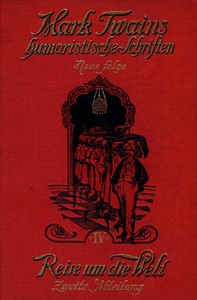
Meine Reise um die Welt. Zweite Abteilung by Mark Twain
Mark Twain wrote 'Following the Equator' (published in German as 'Meine Reise um die Welt') because he was broke. A worldwide lecture tour was his way to pay off debts. This book, specifically the 'Zweite Abteilung' or second part, covers the latter leg of that journey through Australia, New Zealand, India, and South Africa.
The Story
There isn't a traditional plot. Instead, Twain acts as your deeply skeptical tour guide. He sails into Sydney and makes fun of the local animals. He wanders through India, overwhelmed by its history and crowds, finding equal parts beauty and absurdity. He gets exasperated by train schedules, critiques colonial attitudes (often with surprising sharpness for his time), and everywhere he goes, he collects stories—tall tales, historical anecdotes, and conversations with everyone from princes to fellow passengers. The 'journey' is just the frame for Twain's mind to bounce off the world. He's not trying to give you facts; he's giving you his unfiltered, hilarious, and sometimes darkly thoughtful reaction to them.
Why You Should Read It
You read this for Twain's voice. It’s like traveling with the world's smartest, most sarcastic friend. One minute he's painting a vivid picture of a sacred river in India, and the next he's complaining about the heat or telling a joke that's so bad it's good. His humor is a weapon he uses on pompous officials, boring travel writers, and himself. But what stuck with me were the quiet moments. His writing on the horrors of the colonial slave trade in Mauritius is powerful and angry, showing a moral core beneath the jokes. He doesn't pretend to have all the answers. He's just a curious, tired, funny man trying to make sense of a vast and strange planet, and letting us listen in.
Final Verdict
Perfect for fans of travel writing who hate typical travel writing. If you love Bill Bryson's mix of history and humor, Twain is the original source. It's also a great pick for history buffs who want a ground-level, personal view of the British Empire in the 1890s, complete with all its contradictions. You need a little patience for the old-fashioned style and the rambling structure, but the reward is timeless wit and unexpected heart. This isn't a quick, easy read—it's a long, funny, thoughtful conversation with a genius across the centuries.
You are viewing a work that belongs to the global public domain. Knowledge should be free and accessible.
Susan Davis
2 years agoSolid information without the usual fluff.
Barbara Martinez
3 months agoThe methodology used in this work is academically sound.
James Harris
2 years agoA brilliant read that I finished in one sitting.
Christopher Davis
1 year agoMy first impression was quite positive because the historical context mentioned in the early chapters is quite enlightening. A perfect balance of theory and practical advice.



Margaret Brown
3 months agoThis was exactly the kind of deep dive I was searching for, the step-by-step breakdown of the methodology is extremely helpful for students. Thanks for making such a high-quality version available.