
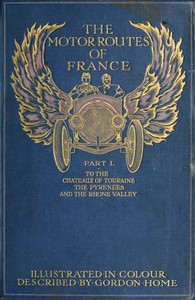
The Motor Routes of France by Gordon Home
Okay, let's clear something up first: this isn't a fiction book with a plot. There's no detective to follow or mystery to solve. Instead, Gordon Home gives us something better—a front-row seat to history. He wrote this guide in the early 20th century, right when regular people were starting to explore by car. The 'story' is the journey itself. Home acts as your chatty, knowledgeable co-pilot, leading you on specific drives through the French countryside. He tells you exactly which road to take, where to find a good hotel (or a terrible one to avoid), and what stunning castle or ancient town you'll see around the next bend.
The Story
Think of it as a series of perfect day trips stitched together into a grand tour. Home starts in the north, in places like Dieppe, and takes you south through the heart of France. He describes rolling hills dotted with vineyards, dramatic coastlines, and sleepy villages. Along the way, he shares bits of local history, points out architectural details you might miss, and even complains about bad road conditions. His writing is so vivid you can almost smell the petrol and the fresh bread from a bakery he recommends. The narrative is the adventure of early motoring—the excitement, the challenges, and the breathtaking beauty of seeing France at a leisurely pace.
Why You Should Read It
I loved this book because it’s a double adventure. First, it’s a practical guide to a France that has largely vanished. Second, and more importantly, it captures a specific moment of pure optimism and discovery. Home’s enthusiasm is infectious. He’s not just listing facts; he’s sharing his genuine delight in a beautiful view or a good meal. You get a real sense of the man and his era. Reading it today, it becomes a fascinating historical document. You realize how much travel has changed, but also how the core desire to explore and be amazed by new places remains the same.
Final Verdict
This book is a perfect little escape. It’s ideal for history lovers, travel buffs, and anyone who enjoys armchair adventures. If you've ever dreamed of a slow, scenic road trip through Europe, this is your blueprint. It’s also a great pick for fans of old maps and vintage travel writing. Just be warned: it will give you a serious case of wanderlust for a France that exists now only in pages like these.
This is a copyright-free edition. You do not need permission to reproduce this work.
Jennifer Moore
6 months agoAs someone working in this industry, I found the insights very accurate.
James Johnson
3 months agoExtremely helpful for my current research project.
Linda Smith
1 year agoI took detailed notes while reading through the chapters and the data points used to support the main thesis are quite robust. It cleared up a lot of the confusion I had previously.
Susan Anderson
5 months agoI appreciate how this edition approaches the core problem, the structural organization allows for quick referencing of key points. It definitely lives up to the reputation of the publisher.





George Lee
1 year agoThe clarity of the concluding remarks is very professional.