
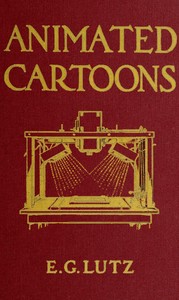
Animated cartoons : How they are made, their origin and development by Lutz
Published in 1920, this isn't a storybook with a plot. Instead, it's a fascinating how-to guide and historical snapshot written by Edwin George Lutz, an artist and early animation pioneer. Think of it as a masterclass from the workshop floor of animation's birth.
The Story
The 'story' here is the step-by-step creation of an animated cartoon. Lutz starts at the very beginning, explaining the core principle of persistence of vision—why our brains see a series of still images as movement. Then, he gets wonderfully practical. He walks you through everything: the specific pencils and paper to use, how to set up a lightbox (or a 'glass-top desk,' as he calls it), and the precise way to draw sequential images to create smooth motion. He details how to film these drawings, one frame at a time, and even how to add basic backgrounds and synchronized sound. It's a complete, nuts-and-bolts breakdown of the entire process, written with the assumption that you, the reader, might want to go try it yourself.
Why You Should Read It
Reading this book is a humbling and thrilling experience for anyone who loves animation or creativity. There are no shortcuts here, no software 'undo' button. You feel the sheer physical effort and precision required. When Lutz explains how to animate a simple bouncing ball, you gain a deep respect for the artists who animated complex characters. It demystifies the magic by showing you the gears and pulleys, but in doing so, it makes the final result feel even more magical. You see the direct line from these basic techniques to the cartoons we grew up with. It’s also filled with charming period details, like advice on submitting your cartoon to film distributors, that transport you right back to the Roaring Twenties.
Final Verdict
This book is a treasure for a specific reader. It's perfect for animation students, film history nerds, and artists curious about traditional techniques. If you've ever watched a documentary on Walt Disney and wanted more technical meat, this is your primary source. It's not a breezy read; it's a technical manual. But if you approach it with curiosity, it’s like being handed a key to a forgotten workshop. For the casual reader, it might be too detailed. But for the right person, it's an essential and inspiring look at how a brand-new art form was built, one drawing at a time.
This is a copyright-free edition. Feel free to use it for personal or commercial purposes.
James Thomas
2 months agoHaving explored several resources on this, I find that the way it handles controversial points with balance is quite professional. I'm glad I chose this over the other alternatives.
John Gonzalez
6 months agoBefore I started my latest project, I read this and the logic behind each conclusion is easy to follow and verify. A refreshing and intellectually stimulating read.
Mark Wilson
1 year agoI started reading out of curiosity and the clarity of the writing makes this accessible. Exceeded all my expectations.

Christopher Lopez
3 months agoA sophisticated analysis that fills a gap in the literature.