1

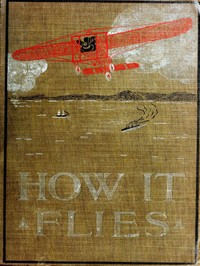
How It Flies; or, The Conquest of the Air The Story of Man's Endeavors to Fly and of the Inventions by Which He Has Succeeded — A Closer Reading
(0 User reviews)
24
Project Gutenberg
2017
Not confirmed
Aeronautics
Readers of public-domain and historical texts
Project Gutenberg digital edition
en
Edition facts
Words
73,767
Reading time
321 min
Text sections
11
How It Flies; or, The Conquest of the Air The Story of Man's Endeavors to Fly and of the Inventions by Which He Has Succeeded — A Closer Reading can be approached with a clearer sense of reading commitment from its source measurements: 73,767 words, 5 hr 21 min estimated reading time, and 11 detected text sections.
The text analysis averages about 19.6 words per sentence, while the detected sections provide another way to judge how the source is divided.
Project Gutenberg metadata also associates the work with “Aeronautics,” connecting these edition facts with the source record’s subject description.
Source:
Project Gutenberg record #55268
Richard Ferris's 1910 survey of aeronautics, from balloons to biplanes, explains flight physics, construction, and operation in plain language, with over 150 illustrations. The narrative voice shifts from historical chronicle to practical handbook, reflecting the rapid progress of early aviation.
Editorial Edition Score
4.8/5
★★★★★
★★★★★
Calculated from edition completeness, EPUB availability, text structure and catalogue metadata. Not a user rating.
How this score is calculated
- Description quality20 pts
- Title & short description10 pts
- Source metadata20 pts
- Text length15 pts
- Chapters / structure15 pts
- EPUB file integrity20 pts
Total of 100 points, scaled to a 2.5-5.0 range. Editions with an empty description or a missing EPUB file are not scored.
Edition quality
Read the Text
The sudden awakening--Early successes--Influence of the gasoline engine on aeroplanes--On dirigible balloons--Interested inquiry--Some general terms defined.
In the year 1908 the world awakened suddenly to the realization that at last the centuries of man’s endeavor to fly mechanically had come to successful fruition.
There had been a little warning. In the late autumn of 1906, Santos-Dumont made a flight of 720 feet in a power-driven machine. There was an exclamation of wonder, a burst of applause--then a relapse into unconcern.
In August, 1907, Louis Bleriot sped free of the ground for 470 feet; and in November, Santos-Dumont made two flying leaps of barely 500 feet. That was the year’s record, and it excited little comment. It is true that the Wright brothers had been making long flights, but they were in secret. There was no public knowledge of them.
In 1908 came the revelation. In March, Delagrange flew in a Voisin biplane 453 feet, carrying Farman with him as a passenger. Two weeks later he flew alone nearly 2½ miles. In May he flew nearly 8 miles. In June his best flight was 10½ miles. Bleriot came on the scene again in July with a monoplane, in which he flew 3¾ miles. In September, Delagrange flew 15 miles--in less than 30 minutes. In the same month the Wrights began their wonderful public flights. Wilbur, in France, made records of 41, 46, 62, and 77 miles, while Orville flew from 40 to 50 miles at Fort Myer, Va. Wilbur Wright’s longest flight kept him in the air 2 hours and 20 minutes.
The goal had been reached--men had achieved the apparently impossible. The whole world was roused to enthusiasm.
Since then, progress has been phenomenally rapid, urged on by the striving of the inventors, the competition of the aircraft builders, and the contests for records among the pilots.
By far the largest factor in the triumph of the aeroplane is the improved gasoline engine, designed originally for automobiles. Without this wonderful type of motor, delivering a maximum of power with a minimum of weight, from concentrated fuel, the flying machine would still be resting on the earth.
Nor has the influence of the gasoline motor been much less upon that other great class of aircraft, the dirigible balloon. After 1885, when Renard and Krebs’ airship _La France_ made its two historic voyages from Chalais-Meudon to Paris, returning safely to its shed, under the propulsion of an electric motor, the problem of the great airship lay dormant, waiting for the discovery of adequate motive power. If the development of the dirigible balloon seems less spectacular than that of the aeroplane, it is because the latter had to be created; the dirigible, already in existence, had only to be revivified.
Confronted with these new and strange shapes in the sky, some making stately journeys of hundreds of miles, others whirring hither and thither with the speed of the whirlwind, wonder quickly gives way to the all-absorbing question: _How do they fly?_ To answer fully and satisfactorily, it seems wise, for many readers, to recall in the succeeding chapters some principles doubtless long since forgotten.
As with every great advance in civilization, this expansion of the science of aeronautics has had its effect upon the language of the day. Terms formerly in use have become restricted in application, and other terms have been coined to convey ideas so entirely new as to find no suitable word existent in our language. It seems requisite, therefore, first to acquaint the reader with clear definitions of the more common terms that are used throughout this book.
_Aeronautics_ is the word employed to designate the entire subject of aerial navigation. An _aeronaut_ is a person who sails, or commands, any form of aircraft, as distinguished from a passenger.
_Aviation_ is limited to the subject of flying by machines which are not floated in the air by gas. An _aviator_ is an operator of such machine.
Both aviators and aeronauts are often called _pilots_.
A _balloon_ is essentially an envelope or bag filled with some gaseous substance which is lighter, bulk for bulk, than the air at the surface of the earth, and which serves to float the apparatus in the air. In its usual form it is spherical, with a car or basket suspended below it. It is a _captive balloon_ if it is attached to the ground by a cable, so that it may not rise above a certain level, nor float away in the wind. It is a _free balloon_ if not so attached or anchored, but is allowed to drift where the wind may carry it, rising and falling at the will of the pilot.
A _dirigible balloon_, sometimes termed simply a dirigible, usually has its gas envelope elongated in form. It is fitted with motive power to propel it, and steering mechanism to guide it. It is distinctively the _airship_.
Ferris opens with a striking claim: in 1908 the world 'awakened suddenly' to the reality of mechanical flight. This sense of a recent, dramatic breakthrough shapes the book's tone—part historical record, part instructional manual. The preface promises 'simple language and suitable pictures' to explain 'the Ships of the Air,' and the text delivers on that promise, alternating between narrative accounts of early experiments and detailed technical descriptions of propellers, motors, and control surfaces.
The author's voice is that of an engineer-educator, confident in the progress already made but cautious about future possibilities. He treats the air as 'a vast, unexplored ocean,' a metaphor that recurs throughout the chapters on balloons and dirigibles. The excerpts show a writer who moves briskly from the Montgolfiers' hot-air experiments to the Wright brothers' racers, always grounding each innovation in the physical principles that make flight possible.
From History to Handbook: A Shift in Register
The book's structure reveals a deliberate change in pace and purpose. The early chapters—'The Air,' 'Laws of Flight'—read like a physics primer, explaining density, lift, and drag with diagrams and equations. But by Chapter IV, 'Flying Machines,' the prose becomes more urgent, cataloguing specific models: the biplane, the monoplane, 'other forms.' The historical anecdotes (Cyrano de Bergerac's bags of air, Francisco de Lana's vacuum spheres) give way to step-by-step instructions for building and operating machines.
This shift is most evident in the chapter headings themselves. 'How to Operate' and 'How to Build' are direct, imperative, and practical. Ferris assumes his reader may soon be a pilot or constructor, not just a spectator. The language tightens: sentences grow shorter, lists appear, and the authorial 'we' of the preface ('We who live to-day have witnessed man's great achievement') fades into a more impersonal, instructional tone.
The Balloon Chapters: A Different Rhythm
When Ferris turns to balloons, the narrative slows and becomes more speculative. The chapter 'Balloons: The Dirigible' traces a longer, more erratic history—from Chinese coronations in 1306 to the Montgolfiers' paper bag in 1783. The prose here is anecdotal, even whimsical: Galen's plan for a ship carrying '4,000,000 persons' is described without irony, and de Lana abandons his experiments on religious grounds. Ferris seems to enjoy these digressions, letting the story meander through failed attempts and forgotten inventors.
This contrasts sharply with the aeroplane sections, where progress is linear and triumphant. The balloon chapters also dwell on practical problems—gas leakage, cold at altitude, the need for ballast—in a way that the aeroplane chapters do not. The result is a book that feels like two works in one: a romantic history of lighter-than-air flight and a modern manual for heavier-than-air machines.
Recurring Details and the Engineer's Eye
Ferris repeatedly draws attention to materials and measurements. He notes that early balloons used paper, then silk coated with rubber varnish; that the Montgolfier balloon was '35 feet in diameter'; that Charles's hydrogen balloon weighed 'about 20 pounds.' These specifics ground the narrative in tangible objects. The same precision appears in the flying-machine chapters, where he describes the '80-mile-an-hour "Baby Wright" Racer' and the '720 feet' of Santos-Dumont's flight.
The author also has a habit of correcting misconceptions. He points out that the Montgolfiers were 'wholly ignorant' of why their balloon rose, and that Galen's mathematical computations were flawed. This critical stance—part historian, part engineer—gives the book an authoritative, no-nonsense voice. Even when recounting failures, Ferris treats them as data points, not cautionary tales.
Readers should approach How It Flies as a document of its moment—1910, just two years after the 'sudden awakening' Ferris describes. The book's value lies not in its predictions (which are few) but in its snapshot of a technology in transition. The shift from historical narrative to practical instruction mirrors the broader cultural shift from wonder to mastery. Ferris's plain, confident prose makes the technical material accessible, while his willingness to include dead ends and forgotten figures gives the history a human texture.
I remember evenings turning pages of How It Flies with its astonishing, hopeful diagrams, watching the world grow lighter. That quiet perseverance of inventors put me in mind of another shelf, the steady biographies within Eminent literary and scientific men of Italy, Spain, and Portugal. Vol. 1 (of 3) — Text and Context. Both share a gentle faith in human reach, a triumph measured step by patient step.
There are no reviews for this eBook.
There are no comments for this eBook.
Reader reflection
Your personal reading reflection
Build a private reading journal entry for this title.
Your progress
0
/
10
2
How much did you enjoy the reading experience?
3
Would you pass this book on to a friend?
4
What was the reading difficulty like?
5
What did you think about the pace?
6
How distinctive were its ideas or approach?
7
Would you start a conversation about this book?
8
Would a second reading be valuable?
9
In one sentence, what did you learn?
10