1

Panama and the Canal in Picture and Prose — Inside the Classic
(0 User reviews)
912
Project Gutenberg
2021
Not confirmed
Panama Canal (Panama) -- History
Readers of public-domain and historical texts
Project Gutenberg digital edition
en
Edition facts
Words
166,939
Reading time
726 min
Text sections
25
For Panama and the Canal in Picture and Prose — Inside the Classic, the stored edition analysis reports 166,939 words, 12 hr 6 min estimated reading time, and 25 detected text sections.
The text analysis averages about 26.1 words per sentence, while the detected sections provide another way to judge how the source is divided.
Project Gutenberg metadata also associates the work with “Panama Canal (Panama) -- History,” connecting these edition facts with the source record’s subject description.
Source:
Project Gutenberg record #64476
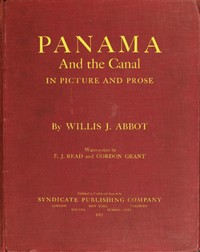
Willis J. Abbot's 1913 illustrated history of the Panama Canal uses firsthand reporting, historical narrative, and vivid anecdotes to document the canal's construction, from the French failure to the American project, with over 600 photographs.
Editorial Edition Score
4.9/5
★★★★★
★★★★★
Calculated from edition completeness, EPUB availability, text structure and catalogue metadata. Not a user rating.
How this score is calculated
- Description quality20 pts
- Title & short description10 pts
- Source metadata20 pts
- Text length15 pts
- Chapters / structure15 pts
- EPUB file integrity20 pts
Total of 100 points, scaled to a 2.5-5.0 range. Editions with an empty description or a missing EPUB file are not scored.
Edition quality
Read the Text
CHAPTER I. THE FRONT DOOR TO PANAMA 9
Antilla, a New Sugar Port--The Island of Jamaica--Kingston, The Colonial Capital--Women as Burden Bearers--Characteristics of the Native Jamaican--Life of the Negro Woman.
CHAPTER II. CRISTOBAL-COLON; AND THE PANAMA RAILROAD 23
The Approach to Colon--The Architecture and Population of Colon--Railroad Building in a Swamp--The French Come to Colon--The Beautiful Roosevelt Avenue--Colon Streets in the Early Days--The Varied Population of Colon--San Blas Indians and Their Cayucas--The Ghastly Story of the Chinese--Cost and Charges of the Panama Railroad.
CHAPTER III. NOMBRE DE DIOS, PORTO BELLO AND SAN LORENZO 45
The Harbor of Porto Bello--The First Appearance of Balboa--Early Indian Life in Panama--The Futile Indian Uprising--The First Sight of the Pacific--The Beginning of Balboa’s Downfall--The Traitor in Balboa’s Camp--The Character of Vasco Nunez de Balboa--Panama a Link in Philippine Trade--Flush Times in Porto Bello--The Piratical Raid of Sir Francis Drake--The Futile Attack on the Treasure Train--The Appearance of Morgan the Buccaneer--The Pillage of Porto Bello.
CHAPTER IV. SAN LORENZO AND PANAMA 75
The Waterway to San Lorenzo--Approach to San Lorenzo Castle--A Rip Van Winkle of a Fortress--The Assault of the Buccaneers--The End of Porto Bello and San Lorenzo.
CHAPTER V. THE SACK OF OLD PANAMA 87
The Advance of the Buccaneers--The Banquet before Panama--The Buccaneers Triumphant in Battle--The Pirates’ Orgy of Plunder--How Morgan Plundered His Pirates--The Scene of Morgan’s Great Exploit.
CHAPTER VI. REVOLUTIONS AND THE FRENCH RÉGIME 101
The Scottish Settlement in Panama--Disasters Beset the Scotch Colonists--The Repeated Revolutions of Panama--Early Projectors of a Panama Canal--Sea Level or Lock Canal--A Relic of the French Days--Some of the Finished Work of the French--The Financial Aberrations of De Lesseps--Yellow Fever’s Toll of French Lives--The Value of the French Work.
CHAPTER VII. THE UNITED STATES BEGINS WORK 123
Why Panama Wanted Independence--Our Share in the Revolution--A Revolution Without a Single Battle--Treaty Rights of the United States--Illustrations of the Magnitude of the Canal Work--The Passage of the Canal Locks--Spectacular Features of Gatun Lake--The Abandonment of Canal Towns--The Pacific Terminus of the Canal--The Forts at the Pacific Entrance.
CHAPTER VIII. THE FORMATIVE PERIOD 147
The Beginning of Work under Wallace--The Absentee Commissioners and the Red Tape--The Successful War with Yellow Fever--The Change from Wallace to Stevens--The Varying Estimates of the Canal Cost--The Resignation of Engineer Stevens.
CHAPTER IX. COL. GOETHALS AT THE THROTTLE 161
What the Colonel Meant by Orders--The Colonel’s Sunday Morning Court--The Autocratic Power of Col. Goethals--The Panama Work Shows Governmental Efficiency.
CHAPTER X. GATUN DAM AND LOCKS 171
Atlantic Beginning of the Canal--The Plan of the Gatun Dam--How the Chagres Current was Blocked--The Spillway, The Nerve Center of Gatun Lake--The Uses of the Electric Power of Gatun--The Colossal Concrete Work at Gatun--The Motive Power of the Lock Gates.
CHAPTER XI. GATUN LAKE AND THE CHAGRES RIVER 187
The Native Affection for the Chagres--The Indispensable Native Cayuca--Keeping the Record of the Chagres--Cruces in Its Day of Greatness--Animal Life on the Chagres River--A Typical Foreign Laborer on The Zone.
CHAPTER XII. THE CULEBRA CUT 201
The Great Problem of the Slides--The Physical Characteristics of the Slide--Some Peculiar Features of the Slides--The Explosive Experience of Miguel--The Gorgeous Coloring of Culebra--The Perilous Passage of Culebra Cut--The almost Human Work of the Steam Shovel--The Work of the Steam Shovellers--The almost Indispensable Track Shifter--The Industrious Ants of Panama--The End of the Canal at Balboa.
CHAPTER XIII. THE CITY OF PANAMA 224
The First Appearance of Panama City--The Popular Panama Lottery--Panama’s Cost of Living is High--Scenes in the Panama Market--The Prevalent Temper of the Panamanians--Why Americans are not Popular--American Sentiment on the Isthmus--The Public Buildings of Panama--The Stout Walls of Panama City--Scenes of the Mardi Gras Carnival--Cock-Fighting and the Liquor Trade--In the Ancient Chiriqui Prison--The Many Churches of Panama--Panama Clubs and Open Air Life.
CHAPTER XIV. THE SANITATION OF THE ZONE 253
Beginning the Warfare on Mosquitoes--Methods of the Anti-Mosquito Crusade--Some Humors of the Mosquito War--How the Streams are Sterilized--Results of the War on Mosquitoes--The Two Great Canal Commission Hospitals--The System of Free Medical Treatment--The Pleasant Village of Taboga--The Sanitarium and Leper Colony.
CHAPTER XV. THE REPUBLIC OF PANAMA 273
The Doubtful Soil of Panama--The Simple Study of Native Life--The Building of the Bridegroom’s House--Labor and Land Titles in Panama--Agriculture and Temperature in Panama--Rubber and Cocoanuts Offer Possibilities--The Sport of Shooting Alligators--A Colossal Agricultural Enterprise--The Banana as an Empire Builder--Why the American Flag is Rare--Getting the Bananas to Market--David and the Cattle Country--Gold from the Indian Tombs--Efforts for a System of Industrial Education.
CHAPTER XVI. THE INDIANS OF PANAMA 305
Marriage Customs of the Indians--The Many Tribes of Panama Indians--Characteristics of the San Blas Tribe--An Exclusive Aboriginal People--Family Quarters of the San Blas--Customs of the Chocos and Guaymies--Peculiarities of the Darien Indians.
CHAPTER XVII. SOCIAL LIFE ON THE CANAL ZONE 320
Willis J. Abbot's 1913 volume opens not with engineering diagrams but with a correction of popular geography: the canal runs eastward from the Atlantic into the Pacific, a fact the author insists is contrary to common belief. This small but telling detail sets the tone for a work that blends technical exposition with a journalist's eye for the surprising and human. The book's subtitle promises a 'complete story of Panama,' and its table of contents reveals a structure that moves from the 'front door' of the Caribbean coast through colonial history, revolutions, and finally to the American construction effort. Abbot, a prolific writer on naval and maritime subjects, frames the canal as 'the most gigantic engineering undertaking since the dawn of time,' but his prose often dwells on the workers, the landscape, and the accidents that punctuated the project.
A Reporter's Eye on the Cut
Abbot's narrative is strongest when he steps aside from official accounts and lets workers and engineers speak. In one passage, he describes a Spaniard named Miguel who was 'blown at least 80 feet high' by a premature dynamite blast. Miguel's own account—'I seet on ze aidge of ze cut, smoke my pipe, watch ze work when—Boom! I fly up in air, up, up! I stop. It seem I stop long time'—is rendered in dialect and with a wry editorial comment that 'his chief sorrow is that no moving picture man took the incident.' This anecdote is not merely colorful; it illustrates the constant presence of explosives. Abbot notes that the official handbook recorded a pound of dynamite for every two cubic yards of material, and that total excavation reached about 200,000,000 cubic yards. The scale of blasting is made visceral through individual stories.
Heroism and Hazard in the Dynamite Corps
Abbot recounts the story of Angel Alvarez, a worker who, seeing a boulder about to crush two open boxes of dynamite, shouted a warning and thrust the boxes aside rather than flee. The rock killed him, but the explosion that would have killed twenty men was averted. 'They thought that Alvarez was broken to bits when they gathered him up,' Abbot writes, 'but the surgeons patched him up, and made a kind of a man out of him.' The passage is notable for its matter-of-fact tone: Alvarez is described as 'not very shapely or vigorous' but as one who 'carries the lives of twenty men he saved.' Such episodes are scattered through the text, giving a human dimension to the industrial statistics. Abbot does not moralize; he lets the incident stand as a record of the risks that were routine in the Cut.
The French Legacy and the Scale of the Work
Though the excerpts focus on the American period, Abbot repeatedly references the French effort that preceded it. Dynamite left from the French days was occasionally unearthed by steam shovels, and once a shovel 'engulfed at the same time about a bushel of dynamite left from the French days.' The survival of workers in such incidents is treated as near-miraculous. Abbot also provides technical details: 221 tripod drills and 156 well drills were in use, and over 90 miles of holes were drilled for blasting. These numbers, juxtaposed with the human stories, create a layered portrait of the construction. The book's structure, moving from geography to history to engineering, allows readers to see the canal as a palimpsest of earlier failures and later triumphs.
Photographs as Evidence
The title promises 'Picture and Prose,' and the excerpts confirm that the book was profusely illustrated with over 600 photographs taken by a special staff. The captions and images are not reproduced in the text excerpts, but the author's prose often functions as a verbal photograph. Descriptions of Jamaicans operating compressed air drills, of the 'sideways like a crab' walk of the injured Miguel, and of the 'riotous days' of the Isthmus all suggest a visual sensibility. Abbot was not an engineer but a journalist, and his book is organized as a series of scenes rather than a technical manual. For a first-time reader, the interplay between the photographs and the text would be essential: the images ground the anecdotes in a specific, documented reality, while the prose supplies the context and human interest that a photograph alone cannot convey.
Abbot's book is best approached as a contemporary documentary, not a retrospective history. The reader should expect a mix of boosterism, anecdote, and statistical detail, all filtered through the lens of a 1913 American journalist. The excerpts suggest that the most vivid passages are those where Abbot lets his subjects speak or describes near-disasters. Readers interested in the social history of the canal's construction will find rich material, while those seeking a purely technical account may need to supplement with later sources. The photographs, though not sampled here, are integral to the work's method.
Sometimes a book stays with you not for its grand story, but for the quiet devotion it carries—like that old Panama volume, where every photograph felt like a hand reaching across time. I felt that same tenderness lately in The Art of Bookbinding: A practical treatise, with plates and diagrams — Edition Insights, its careful plates whispering of hands that wanted things to last.
There are no reviews for this eBook.
There are no comments for this eBook.
Reader reflection
Take a moment to reflect on this book
Create a short personal record of your experience with this book.
Your progress
0
/
10
2
What was your overall reaction to the book?
3
Is this a title you would suggest to others?
4
How demanding did the text feel?
5
Would you like to discuss this book with someone?
6
Would a second reading be valuable?
7
Did any part of the book stay with you emotionally?
8
Which aspect of the book did you value most?
9
Which lesson or insight stayed with you?
10