1

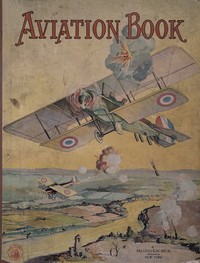
Aviation Book — Themes and Context
(0 User reviews)
360
Project Gutenberg
2020
Not confirmed
Aeronautics -- Juvenile literature
Readers of public-domain and historical texts
Project Gutenberg digital edition
en
Edition facts
Words
7,490
Reading time
33 min
Text sections
2
For Aviation Book — Themes and Context, the stored edition analysis reports 7,490 words, 33 min estimated reading time, and 2 detected text sections.
The text analysis averages about 18.6 words per sentence, while the detected sections provide another way to judge how the source is divided.
Project Gutenberg metadata also associates the work with “Aeronautics -- Juvenile literature,” connecting these edition facts with the source record’s subject description.
Source:
Project Gutenberg record #62472
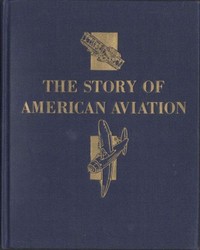
A 1918 juvenile aviation book framed as Uncle Sam's story to his nephews Tom and Jack, blending Boy Scout earnestness with detailed descriptions of early flight, wartime sea battles, and peace-time aerial transport.
Editorial Edition Score
4.5/5
★★★★★
★★★★★
Calculated from edition completeness, EPUB availability, text structure and catalogue metadata. Not a user rating.
How this score is calculated
- Description quality20 pts
- Title & short description10 pts
- Source metadata20 pts
- Text length15 pts
- Chapters / structure15 pts
- EPUB file integrity20 pts
Total of 100 points, scaled to a 2.5-5.0 range. Editions with an empty description or a missing EPUB file are not scored.
Edition quality
Read the Text
Note: Project Gutenberg also has an HTML version of this file which includes the original illustrations. See 62472-h.htm or 62472-h.zip: (http://www.gutenberg.org/files/62472/62472-h/62472-h.htm) or (http://www.gutenberg.org/files/62472/62472-h.zip)
Images of the original pages are available through Internet Archive. See https://archive.org/details/aviationbook00davi
Text enclosed by underscores is in italics (_italics_).
Copyright, 1918, by McLoughlin Brothers. Inc. New York
------------------------------------------------------------------------
Tom and Jack are brothers and chums. They are Boy Scouts. Jack is first class, but Tom is only a tenderfoot. Like all bright, manly boys they are interested in airships and are anxious for the time to come when they can fly too.
Tom and Jack’s uncle is a famous aviator, and he knows all about flying. His name being Samuel the boys always call him Uncle Sam, and they sometimes jokingly pretend to think that he is the great Uncle Sam who represents the United States.
Tom and Jack knew that the best way to find out about airships was to ask their Uncle Sam. So, as soon as they saw him, they made him consent to tell his wonderful story of aviation.
Tom and Jack were all ears as their uncle started his aviation story.
“First,” he began, “I shall tell you the thrilling tale of Man’s long striving to learn how to rival the birds. In myths and fairy tales there were men and goblins who had wings or who owned winged chariots and animals. But real, everyday people never learned how to go up in the air until 1783.”
“The very year England and the United States made peace after the Revolutionary War!” exclaimed Tom.
“Don’t interrupt Uncle Sam; it is not polite,” advised Jack.
“Well,” continued Uncle Sam, “it was on June 5, 1783 that Stephen and Joseph Montgolfier, two French brothers, sent up the first balloon. You can just imagine the amazement it caused when it arose from the ground.
“Many successful experiments were made with balloons; but they were harder to run than old-time sailboats. A balloon could not fly against the wind. In a storm or a heavy gale it would be wrecked and the passengers killed. A machine was needed that could speed against the wind and not upset in a heavy blow.
“A few inventors tried to solve the flying problem with motor-driven balloons such as the German Zeppelin. But most attention was given to heavier-than-air machines known as aeroplanes. Aeroplanes are called heavier-than-air to distinguish them from balloons, which, being inflated with gas, are lighter than air. There were many discouraging years of hard thought and labor before success came. Finally, in 1905, two American brothers, Wilbur and Orville Wright, invented the first successful flying machine; and in a series of marvelous flights showed that Man had, at last, rivaled the birds.
“Numerous inventions have made man almost the equal of the birds in the air. Flying has been made nearly as safe as riding on horseback or in an automobile. The aeroplane is now a necessity in times of war and peace. Its startling deeds will be the subject of the story I’m about to tell.
“Of course, you want to know something about the man who runs an aeroplane,” said Uncle Sam.
“Indeed, we do,” replied both boys at the same time.
“Now,” continued Uncle Sam, “to become a military aviator a man must, first of all, have a strong, healthy body, a quick, active mind, and iron nerves. There are many good aviators that wouldn’t be good _military_ aviators, because the strain of war would prove too much for them. If a man is just right in body and mind, they send him to an aviation training camp where he is taught to fly.
“At the training camp he is instructed in the care of an aeroplane and its powerful motor. He goes up in the air a number of times with an expert aviator. By constantly watching the expert, he learns to fly. Then he learns many dazzling stunts—to loop-the-loop, make figure eights, fly upside down, and other dangerous maneuvers.
“After the new aviator knows how to care for an aeroplane and fly perfectly, he is taught wireless telegraphy, and shown how to take aerial photographs, fire machine guns and drop bombs. As soon as he learns all these things, he’s a full-fledged aviator, and ready to go into active service for his country.”
Tom and Jack had their eyes wide open in wonder as Uncle Sam continued:
Haywood Leslie Davis's Aviation Book (1918) opens not with a lecture but with a domestic scene: Tom and Jack, Boy Scouts, corner their uncle Samuel—a famous aviator they call Uncle Sam—to hear his aviation story. The framing device is deliberately playful: the boys “jokingly pretend to think that he is the great Uncle Sam who represents the United States.” This patriotic pun sets the tone for a book that mixes instructional enthusiasm with wartime urgency. The narrative voice shifts between the uncle's direct address and the boys' interruptions, creating a layered reading experience where technical explanations are punctuated by Tom's historical exclamations and Jack's reminders about politeness.
From Montgolfier to Kitty Hawk: A Condensed History of Flight
Uncle Sam begins his story with a brisk chronology of human flight, starting with the Montgolfier brothers' balloon ascent in 1783—the same year, Tom notes, that “England and the United States made peace after the Revolutionary War.” The narrative contrasts balloons, which were “harder to run than old-time sailboats,” with heavier-than-air machines. Davis emphasizes the Wright brothers' 1905 invention as the breakthrough that finally let man “rival the birds.” The historical arc is compressed and purposeful: it moves from myth and fairy tales to practical experimentation, always stressing the need for a machine that could “speed against the wind and not upset in a heavy blow.” The language is concrete, avoiding abstract theory in favor of tangible obstacles.
Wartime Aviation: Seaplanes, Zeppelins, and the Sounds of Battle
The longest sustained passage in the excerpts describes a naval battle from the air. Davis uses onomatopoeic and visceral language: guns are “banging and booming—hundreds of times louder than thunder”; a seaplane's machine gun “shrieks”; an enemy aeroplane becomes “a streak of flaming wood and tangled metal.” The scene is cinematic, with quick cuts between a submarine destroyed by a pressure-sensitive bomb (“crushed like an egg shell”) and a Zeppelin split in half by a bomb. Uncle Sam's narration insists on the value of aviation in war, but the violence is stylized—a set piece of destruction rather than a realistic account. The repeated phrase “Let's get a glimpse” positions the reader as a spectator, watching the action unfold from a safe distance.
Peace-Time Prophecies: Mail, Liners, and Private Aeroplanes
After the battle, Uncle Sam pivots abruptly to peace-time uses, declaring that “the greatest benefit from the ‘Conquest of the Air’ will come in times of peace.” He predicts aerial ocean liners crossing the Atlantic and Pacific, fast mail-carrying aeroplanes making deliveries “everywhere,” and private aeroplanes “darting here and there among the clouds” as numerous as birds. The tone shifts from dramatic to speculative, with the uncle acknowledging that some uses “won’t come to pass until we are in our graves.” Davis grounds these predictions in a real event: the May 1918 start of regular aeroplane mail service between New York and Washington, D.C. The Caproni triplane crossing the Alps is cited as evidence that aerial transportation is “already here.” The section balances wonder with a sober awareness of the gap between present achievement and future possibility.
Readers should note that Aviation Book is not a technical manual but a narrative hybrid: part Boy Scout adventure, part patriotic primer, part futuristic forecast. The excerpts reveal a work that trusts its young audience to follow complex descriptions of catapult launches and underwater bomb explosions, while also indulging in the boys' earnest interruptions. The book's 1918 publication date places it at a moment when aviation was both a wartime reality and a peacetime promise, and Davis's framing device—Uncle Sam as both relative and national symbol—underscores the civic dimension of flight. Approach the text as a period artifact that uses storytelling to make engineering history vivid.
That old aviation volume, with Uncle Sam recounting flight to his nephews, holds the same steady pulse I find in The story of John Smeaton and the Eddystone lighthouse — Context and Discussion—both are patient lessons in building something lasting against a restless sea, whether of water or of sky. Their quiet certainty has aged well.
There are no reviews for this eBook.
There are no comments for this eBook.
Reader reflection
Before you leave, reflect on the book
Use these questions to collect your thoughts before moving on.
Your progress
0
/
10
2
How much did you enjoy the reading experience?
3
How likely are you to recommend this book?
4
How much effort did this book require?
5
Would a second reading be valuable?
6
How personally connected did you feel to the book?
7
What was its emotional impact?
8
Did you gain anything practical from the text?
9
What is the main idea you are taking away?
10