1

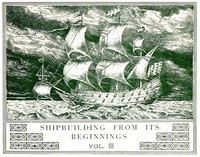
Shipbuilding from its beginnings. Vol. 3 (of 3) — Reading Companion
(0 User reviews)
307
Project Gutenberg
2024
Not confirmed
Shipbuilding -- History; Ships -- History
Readers of public-domain and historical texts
Project Gutenberg digital edition
en
Edition facts
Words
7,294
Reading time
32 min
Text sections
50
For Shipbuilding from its beginnings. Vol. 3 (of 3) — Reading Companion, the stored edition analysis reports 7,294 words, 32 min estimated reading time, and 50 detected text sections.
The text analysis averages about 9.2 words per sentence, while the detected sections provide another way to judge how the source is divided.
Project Gutenberg metadata also associates the work with “Shipbuilding -- History,” connecting these edition facts with the source record’s subject description.
Source:
Project Gutenberg record #74362
This editorial note examines how the opening, middle, and later excerpts of van Konijnenburg's third volume guide a first reading, focusing on the shift from early symbolic vessels to detailed Dutch regional craft.
Editorial Edition Score
4.7/5
★★★★★
★★★★★
Calculated from edition completeness, EPUB availability, text structure and catalogue metadata. Not a user rating.
How this score is calculated
- Description quality20 pts
- Title & short description10 pts
- Source metadata20 pts
- Text length15 pts
- Chapters / structure15 pts
- EPUB file integrity20 pts
Total of 100 points, scaled to a 2.5-5.0 range. Editions with an empty description or a missing EPUB file are not scored.
Edition quality
Read the Text
####################################################################
This e-text is based on the three-volume book ‘Shipbuilding from Its Beginnings,’ from 1895. Inconsistent spelling and hyphenation have been retained; punctuation and typographical errors have been corrected.
Specific font styles have been marked by using the following special characters:
italics: _underscores_ small caps: ~tildes~
####################################################################
SHIPBUILDING FROM ITS BEGINNINGS
SHIPBUILDING FROM ITS BEGINNINGS
E. VAN KONIJNENBURG, C. E.,
_ENGINEER OF THE RIJKSWATERSTAAT OF THE NETHERLANDS_
THE PERMANENT INTERNATIONAL ASSOCIATION
CONGRESSES OF NAVIGATION
EXECUTIVE COMMITTEE -- OFFICE OF THE SECRETARY GENERAL
38, RUE DE LOUVAIN, 38
~Ark van Noach.~ ~Noah’s Ark.~ ~Arche Noah.~ ~Arche de Noé.~
Voorstelling van Liranus (Van Yk). Nach Liranus. According to Liranus. D’après Liranus (Van Yk).
Teekening (~XVII~ᵉ eeuw). Zeichnung (17. Jahrhundert). Drawing of the 17~TH~ century. Dessin du ~XVII~ᵉ siècle.
Volgens Wilhelm Goeree. Nach Wilhelm Goeree. According to Wilhelm Goeree. D’après Guillaume Goeree.
Volgens Van Yk. Nach Van Yk. According to Van Yk. D’après Van Yk.
Neurenberger Kroniek Nürnberger Chronik. Chronicle of Nuremberg. Chronique de Nuremberg.
~VIKINGER SCHIP.~ ~Wikingerschiff.~ ~Viking ship.~ ~Bateau des Vikings.~
Amsterdamsche voeten Amsterdamer Fuss Amsterdam feet Pieds d’Amsterdam
~(Fürtenbach)~ ~Verschil tusschen Noordelijk en Zuidelijk centrum.~ ~Unterschied zwischen Nord- und Südzentrum~ ~Difference between the Northern and Southern centres.~ ~Différence entre le centre Septentrional et Méridional.~
Noordzee (Holland) North Sea Nordsee (Holland) Mer du Nord
Middellandsche Zee Mittelmeer Mediterranean Sea Mer Méditerranée
Platte grond Plan Plan Ebene
1625 ~Pinasschip~ ~Pinasse~ ~Pinnace~ ~Pinasse~
Amsterdamsche voeten van 11 duim
~Pinasschip~ ~Pinnace~ ~Pinasse~ ~Pinasse~
~Pinasschip~ ~Pinasse~ 1678 ~Pinnace~ ~Pinasse~
~Schip van oorlog -- 50 kanonnen~
~Kriegsschiff~ ~50 KANONEN~
~Man of war~ ~50 GUNS~
~Navire de guerre~ ~50 canons~
1750 ~Oost-Indisch Compagnie schip~ ~Schiff der Ostindischen Kompagnie~ ~East India Company’s ship~ ~Navire de la Compagnie des Indes~
1750 ~O. I. Compagnie schip~ ~Schiff der Ostindischen Kompagnie~ ~East India Company’s ship~ ~Navire de la Compagnie des Indes~
1770 ~Schip van oorlog~ ~Kriegsschiff~ ~Man of war~ ~Navire de guerre~
Driedekker Dreidecker Three decker Navire à trois ponts
1770 ~Schip van oorlog~ ~Man of war~ ~Kriegsschiff~ ~Navire de guerre~
Driedekker Dreidecker Three decker Navire à trois ponts
1750 ~Verschil in grootspanten~ ~Unterschiede in den Hauptspanten~ ~Differences at the main frame~ ~Différences au maître-couple~
Frankrijk-Frankreich Holland-Hollande Engeland-England Denemarken-Dänemark
France Angleterre Denmark-Danemark
1690 ~Schip van oorlog Engeland~ ~Navire de guerre Angleterre~ ~Kriegsschiff England~ ~Man of war~
Schaal Maasstab 1 : 300 Scale Eschelle
1790 ~Schip van oorlog~ ~Navire de guerre~ ~Kriegsschiff~ ~Man of war~
Frankrijk France Frankreich
1500 ~Paquebot «Nieuw Amsterdam» Postschiff~ 1750
~Kustbewaarder met 12 ponder~ ~Küstenwachtschiff mit 12 kanonen~ ~Coast guard carrying 12 pdrs~ ~Garde-cote avec pieces de 12~
~Fregat~ ~Fregatte~ ~Frigate~ ~Frégate~
~Koopvardijschip~ ~Kauffahrteischiff~ 1800 ~Merchant ship~ ~Navire marchand~
Achterschip Schiffshinterteil Stern Poupe
Voorschip Schiffsvorderteil Bow Proue
~Fluit~ ~Flute~ 1803 ~Flüte~ ~Flûte~
~Galjoot~ ~Galliot~ ~Galiot~ ~Galiote~
~Huker~ ~Hoeker~ 1830 ~Howker~ ~Hourque~
~Hoeker~ ~Huker~ ~Howker~ ~Hourque~
Voorschip Schiffsvorderteil--Bow Proue
Achterschip Schiffshinterteil--Stern Poupe
~Smak~ 1777 ~Smack~ ~Semaque~
~Hoy.~ ~Kaag.~ ~Kag.~ ~Cague.~
~Tjalk.~ ~(Draai-over-boord)~
~Tjalk mit Dreh über Bord.~ ~Hoy, with tiller swinging over the gunwale.~ ~Tialque avec «draai-over-boord».~
~Tjalk.~ ~(Draai-over-boord)~
~Tjalk mit Dreh über Bord.~ ~Hoy, with tiller swinging over the gunwale.~ ~Tialque avec «draai-over-boord».~
~Zuid-Hollandsche Gaffeltjalk.~ ~Süd-Holländische Gaffeltjalk.~ ~Gaffeltjalk of south Holland.~ ~Gaffeltjalk de la Hollande méridionale.~
~Hek- of Statietjalk.~ ~Heck- oder Statietjalk.~ ~Hek- or Statietjalk.~ ~«Hek-» ou «Statietjalk».~
~Somp of Pegge.~ ~Somp Oder Pegge.~ ~Somp or Pegge.~ ~«Somp» ou «Pegge».~
«~Snijboon.~» ~Bohne.~
~Overijsselsche Praam.~ ~Prahm von Overijssel.~ ~Pram from Overijssel.~ ~Prame de l’Overijssel.~
~Paviljoenpraam.~ ~Prahm mit unterbrochenem Deck.~ ~Pram with paviljoendek.~ ~Prame à pont coupé (Paviljoenpraam).~
~Hoogeveensche Praam.~ ~Hoogeveensche Prahm.~ ~Pram from Hogeveen.~ ~Prame d’Hogeveen.~
~Zeeuwsche Poon.~ ~Seeländische Poon.~ ~Scow from Zeeland.~ ~Poon de la Zélande.~
«~Statie-paviljoen-poon.~»
«~Statie-paviljoen-poon.~» «~Paviljoen Poon.~» «~Statiepoon.~»
~Noord-Hollandsch Yacht.~ ~Nord-Holländische Yacht.~ ~North Holland Tender.~ ~Yacht de la Hollande Septentrionale.~
~Noord-Hollandsch Yacht.~ ~Nord-Holländische Yacht.~ ~North Holland Tender.~ ~Yacht de la Hollande Septentrionale.~
~Boeierschuit.~ ~Bujerschüte.~
~Kraak.~ ~Karaak.~ ~Carack.~
~Gladboordige Turfijker.~ ~Torfkahn mit glattem Bord.~ ~Clinker-built «Turfijker».~ ~«Turfijker» à bordage lisse.~
~Boeieraak.~ ~Bujeraak.~ ~Boeieraakje.~ ~Kleine Bujeraak.~
~Vlaamsche Pleit.~ ~Flämische Pleit.~ ~Flemish Pleit.~ ~Pleit flamand.~
~Otterschip.~ ~Otterschiff.~ ~Ottership.~
~Buitenmot.~ ~Aussen-Motte.~
~Binnenmot.~ ~Binnen-Motte.~ ~Spitsemot.~ ~Spitz-Motte.~
~Hamburger Ever.~ ~Ever from Hamburg.~ ~Ever de Hambourg.~
~Overhaalpontje.~ ~Fährnachen.~ ~Nacelle.~
~Halve Pont.~ ~Halb Nachen.~
~Jaagpont.~ ~Pferdefähre.~ ~Passe-cheval.~
~Kabel-Veerpont.~ ~Kabelfähre.~
~Gierpont.~ ~Gierfähre.~
«~Halve Pont.~» (~Pijper~)
~Veerman van Lemmer op Amsterdam.~ ~Veerman from Lemmer to Amsterdam.~ ~Fährkahn von Lemmer in Amsterdam.~ ~Veerman de Lemmer à Amsterdam.~
~Vlet of Baggeraak.~ ~Nachen oder Baggeraak.~ ~Flat or Baggeraak.~ ~Flette ou Baggeraak.~
~Bovenmaassche Baggeraak.~ ~Baggeraak von der oberen Maas.~ ~Baggeraak from the upper Meuse.~ ~Baggeraak de la Haute Meuse.~
~Hedelsche Aak.~ ~Ake from Hedel.~ ~Aque de Hedel.~
«~Dortsche Zandschuit.~»
~Vreeswijksche Zandlichter.~ ~Sandleichter von Vreeswijk.~ ~Zandlichter from Vreeswijk.~ ~Zandlichter de Vreeswijk.~
~Laadbak.~ ~Leichter.~ ~Barge.~ ~Chaland.~
Schaal in ellen, palmen en duimen. Massstab in Ellen, Faust und Zoll. Scale of ells, palms and inches. Echelle en aunes, palmes et pouces.
~Barge (Trekschuit).~
~Pakschuit (Utrecht).~
~Trekschuit (Utrecht).~
~Westlandsche schuit.~ ~Westländische Schute.~ ~Westland schuit.~
The volume opens not with a preface but with a striking sequence of plates: Noah’s Ark rendered after Liranus and Van Yk, a Viking ship, and then a rapid chronological series from 1200 to 1500. These first images establish a visual argument—shipbuilding as a tradition reaching back to biblical and medieval archetypes. The captions are polyglot, mixing Dutch, German, English, and French, which signals that this work addresses an international audience of engineers and historians. A reader encountering these pages should note that the text volume (Volume I) is separate; Volume III is a plate book, and the narrative is carried by the illustrations themselves.
From Ark to Warship: The Opening Sequence
The first dozen figures move from Noah’s Ark (after Liranus) through a Viking ship, then to generic outlines labeled only by century (1200, 1300, 1400, 1500). This is not a chronological survey in the modern sense—the Ark is anachronistic—but a symbolic genealogy. The inclusion of a Pinasschip from 1625 and a 50-gun man-of-war immediately after suggests that the author’s real interest lies in the early modern period. The captions consistently give dimensions in Amsterdam feet, a local unit, grounding the global history in Dutch practice. A first-time reader should watch for how the plates gradually shift from iconic, almost mythical vessels to measured, technical drawings.
The Dutch Regional Fleet: A Catalogue of Types
The middle and later excerpts are dominated by plates of Dutch working craft: Schokker, Kubboot, Botter, Lemmerjacht, Bolle, Wierschuitje, Hoogaars, Tholensche Schouw, Beierlandsche Schuit, Knots, Steekschuit, and a Vischgondel from Aalsmeer. Each plate gives length, breadth, and draught when light, in meters. The names are local, often from Zuiderzee or Friesland. This section reads like a field guide: the vessels are not arranged by date but by type, and the uniformity of the data (always three measurements) invites comparison. Readers can track how hull proportions vary—the Botter is 12.60 m long, the Kubboot only 6.12 m—and infer different uses.
Visual Language: Polyglot Captions and Scale
Every plate is captioned in four languages (Dutch, German, English, French), but the measurements are given in both Amsterdam feet and meters. This dual system reflects the book’s transitional moment: the 1895 original used local units, while the 1913 edition added metric. The English captions are sometimes awkward (“Draught when light”) but functional. The plates themselves are line drawings, not photographs, which gives them a diagrammatic clarity. A reader should note that the scale is always indicated by a bar labeled “Amsterdamsche voeten” or “M.”, and that the same vessel may appear in multiple views (e.g., the Hoogaars has both a profile and a model view).
What the Excerpts Leave Unsaid
The excerpts contain no explanatory text beyond captions. The reader never sees van Konijnenburg’s own prose, only the plate titles and dimensions. This means the book’s argument—if any—must be inferred from the selection and ordering of images. The early plates suggest a narrative of progress (from Ark to man-of-war), but the later plates abandon chronology for a taxonomic survey of Dutch types. The absence of non-Dutch vessels in the later excerpts is striking; perhaps the full volume includes other regions, but the excerpts do not show them. A first-time reader should approach this as a visual archive, not a continuous history, and be prepared to consult Volume I for the missing text.
Because Volume III is a plate book, the most productive reading strategy is to flip between the illustrations and the descriptive text of Volume I (available separately). Pay attention to the dimensions: they are the only consistent data point across all plates. The polyglot captions reward a reader who compares the Dutch and English terms—Oorlogschip versus “Man of War,” for instance—as they reveal the author’s effort to standardize a technical vocabulary across languages. This is a work to be studied with a ruler, not read in an armchair.
I remember tracing the curves of my grandfather’s old wooden sailboat model, and later, how this volume’s careful drawings of Dutch barges felt like meeting old friends. That same patient intimacy surfaced when reading how The Art of Bookbinding: A practical treatise, with plates and diagrams — Edition Insights described pressing leather, as if each tool had its own quiet story. Both books simply hold their subjects, letting me linger.
There are no reviews for this eBook.
There are no comments for this eBook.
Reader reflection
Before you leave, reflect on the book
Use these questions to collect your thoughts before moving on.
Your progress
0
/
10
2
How much did you enjoy the reading experience?
3
Would you pass this book on to a friend?
4
How much effort did this book require?
5
Would you read this book again?
6
Did any part of the book stay with you emotionally?
7
Was the book moving at the right speed?
8
How closely did the book connect with your experience?
9
What is the main idea you are taking away?
10