1

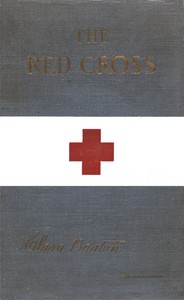
The Red Cross in Peace and War — Context and Discussion
(0 User reviews)
244
Project Gutenberg
2013
Not confirmed
American National Red Cross; Red Cross and Red Crescent
Readers of public-domain and historical texts
Project Gutenberg digital edition
en
Edition facts
Words
245,647
Reading time
1069 min
Text sections
30
For The Red Cross in Peace and War — Context and Discussion, the stored edition analysis reports 245,647 words, 17 hr 49 min estimated reading time, and 30 detected text sections.
The text analysis averages about 25.0 words per sentence, while the detected sections provide another way to judge how the source is divided.
Project Gutenberg metadata also associates the work with “American National Red Cross,” connecting these edition facts with the source record’s subject description.
Source:
Project Gutenberg record #44202
Clara Barton's account of the American Red Cross details its relief operations during the Spanish-American War, drawing on official correspondence, presidential messages, and firsthand reports to document the organization's coordination with government agencies.
Editorial Edition Score
4.9/5
★★★★★
★★★★★
Calculated from edition completeness, EPUB availability, text structure and catalogue metadata. Not a user rating.
How this score is calculated
- Description quality20 pts
- Title & short description10 pts
- Source metadata20 pts
- Text length15 pts
- Chapters / structure15 pts
- EPUB file integrity20 pts
Total of 100 points, scaled to a 2.5-5.0 range. Editions with an empty description or a missing EPUB file are not scored.
Edition quality
Read the Text
Italy was not backward in the performance of her duty. She used her abundant resources in the most effectual way. Not only were her provincial societies of relief united for common action, but they received external aid from France and Switzerland. Here was exhibited the first beautiful example of neutral powers interfering in the cause of charity in time of war--instead of joining in the work of destruction, lending their aid to repair its damages. The provincial committees banded together under the Central Committee of Milan. Four squads, comprising well-trained nurses and assistants, were organized and furnished with all necessary material to follow the military ambulances or field hospitals, whose wagons were placed at their disposal.
Thus the committee not only reinforced the sanitary _personnel_ of the army, but greatly increased its supplies. It provided entirely the sanitary material for the Tyrolese volunteers, and afforded relief to the navy, and when the war was over it remained among the wounded. In addition to the supplies this committee afforded, it expended in money not less than 199,064 francs.
But after all it was Germany standing between the two armies which distinguished herself. Since the Conference of 1863 she had been acting on the rule of preparation, and now found herself in readiness for all emergencies. The Central Committee of Berlin was flooded with contributions from the provincial committees. In the eight provinces of Prussia 4,000,000 of thalers were collected, and the other states of Germany were not behind. So munificently did the people bestow their aid, that large storehouses were provided in Berlin and in the provinces for its reception, and at the central depot in Berlin two hundred paid persons, besides a large number of volunteers, and nearly three hundred ladies and misses were employed in classifying, parceling, packing up, and dispatching the goods. Special railroad trains carried material to the points of need. In one train were twenty-six cars laden with 1800 to 2000 cwt. of supplies. Never had private charity, however carefully directed, been able to accomplish such prodigies of benevolence. It was now that the beneficence of the Treaty and the excellence of the organization were manifested. But the committee did not confine itself to sending supplies for the wounded to the seat of war. It established and provisioned refreshment stations for the trains, to which those unable to proceed on the trains to the great hospitals without danger to life, were admitted, nursed and cared for with the tenderest solicitude until they were sufficiently recovered to be removed, or death took them. At the station of Pardubitz from six hundred to eight hundred were cared for daily for two months, and lodging provided for three hundred at night. This example suffices to show the extraordinary results of well-organized plans and concerted action. During the war, the relief societies had also to contend with the terrible scourge of cholera. There can be no estimate of the misery assuaged and deaths prevented by the unselfish zeal and devotion of the wearers of the Red Cross.
Clara Barton's The Red Cross in Peace and War opens not with a personal narrative but with a presidential message to Congress, immediately establishing the book's documentary character. The volume weaves together official correspondence, government reports, and firsthand accounts, often letting these documents speak for themselves. Barton's own voice emerges primarily through her framing of events and her delegation of specific chapters to colleagues, such as D.L. Cobb's detailed account of the Home Camps. This collaborative authorship mirrors the organizational structure of the Red Cross itself, where authority was distributed across committees and auxiliary societies.
Documentary Voice and Official Sources
The book's reliance on primary sources is evident from the opening pages, which reproduce President McKinley's 1898 message to Congress praising the Red Cross's work in Cuba. Barton incorporates letters, telegrams, and official appeals—such as Secretary of State John Sherman's December 24 appeal for Cuban relief—as structural elements rather than mere appendices. This choice gives the narrative an evidentiary weight, grounding the organization's achievements in verifiable government records. The inclusion of the President's statement that the Red Cross acted 'in conjunction with the governmental authorities and under their sanction and approval' underscores Barton's strategy of legitimizing the Red Cross through official endorsement. Readers encounter a text that functions partly as an archive, preserving the paper trail of humanitarian logistics.
Collaborative Authorship and Delegated Narration
Barton explicitly delegates portions of the narrative to colleagues, most notably D.L. Cobb, who contributes the chapter 'Home Camps and American Waters.' In her introduction to this section, Barton explains that Cobb 'has faithfully and efficiently served with an interest second only to my own,' and she asks him to 'tell the story of the relations of the National Committee with the Government.' This division of labor reflects the Red Cross's operational structure, where tasks were distributed among committees and auxiliary societies. Cobb's chapter then adopts a more granular, logistical perspective, detailing the formation of committees and the mechanics of relief shipments. The shift in voice—from Barton's broader organizational view to Cobb's on-the-ground account—demonstrates how the book's authorship mirrors its subject: a collective enterprise requiring multiple perspectives.
The Language of Humanitarian Bureaucracy
The prose throughout The Red Cross in Peace and War is marked by the formal, procedural language of institutional correspondence. Phrases such as 'arrangements have been perfected,' 'contributions, in money or in kind, can be sent,' and 'the Consul-General has been instructed to receive the same' recur, emphasizing process over emotion. Even descriptions of suffering—'thousands were dying, hundreds of thousands were in want'—are framed within the context of organizational response. This bureaucratic register serves a dual purpose: it conveys the seriousness of the relief effort and positions the Red Cross as a competent, reliable partner to government. Barton's own prose, when it appears, is measured and administrative, avoiding the sentimental tone common in contemporary philanthropic writing. The result is a text that reads less like a memoir and more like an official report, prioritizing accountability over pathos.
Temporal Structure and the Crisis Timeline
The narrative is organized around specific crises, with the Cuban reconcentrado situation serving as a pivotal case study. Barton traces the sequence from 'reports of great suffering' in the summer of 1897, through congressional discussion, to President McKinley's Christmas Eve appeal, and finally to the January 1 conference between Barton, the President, and the Secretary of State. This chronological precision gives the book a procedural rhythm, as each stage of relief—appeal, organization, shipment, distribution—is documented in turn. The inclusion of exact dates and the reproduction of dated correspondence reinforce the sense of a crisis managed through careful timing. Barton's emphasis on the 'time had arrived when something must be done' highlights the urgency that drove the Red Cross's actions, while the step-by-step recounting of events provides a template for future humanitarian response.
Readers approaching The Red Cross in Peace and War should expect a work that prioritizes documentation over personal reflection. Barton's editorial choices—reproducing official letters, delegating chapters to colleagues, and maintaining a formal tone—reveal her intent to create a lasting record of the Red Cross's methods and achievements. The book is best read as a primary source for understanding how humanitarian organizations navigated the intersection of private charity and government authority at the turn of the century.
I’ve been thinking about Clara Barton’s account lately—not the logistics, but how quiet her faith was in small, repeated actions. It reminded me of something else, about how we learn to trust the unseen currents beneath effort. How It Flies; or, The Conquest of the Air The Story of Man's Endeavors to Fly and of the Inventions by Which He Has Succeeded — A Closer Reading holds that same patient wonder, the kind that lingers long after you close it.
There are no reviews for this eBook.
There are no comments for this eBook.
Reader reflection
What was your reading experience?
Capture what you thought, learned, and would like to remember.
Your progress
0
/
10
2
How did the book work for you overall?
3
Would you encourage someone else to read it?
4
How easy was the book to follow?
5
Could you see yourself revisiting this book?
6
What was its emotional impact?
7
Would you like to discuss this book with someone?
8
Which aspect of the book did you value most?
9
In one sentence, what did you learn?
10