1

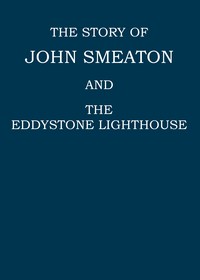
The story of John Smeaton and the Eddystone lighthouse — Context and Discussion
(0 User reviews)
79
Project Gutenberg
2025
Not confirmed
Smeaton, John, 1724-1792; Lighthouses; Eddystone Lighthouse (England); Engineers -- England -- Biography
Readers of public-domain and historical texts
Project Gutenberg digital edition
en
Edition facts
Words
25,805
Reading time
113 min
Text sections
3
For The story of John Smeaton and the Eddystone lighthouse — Context and Discussion, the stored edition analysis reports 25,805 words, 1 hr 53 min estimated reading time, and 3 detected text sections.
The text analysis averages about 26.9 words per sentence, while the detected sections provide another way to judge how the source is divided.
Project Gutenberg metadata also associates the work with “Smeaton, John, 1724-1792,” connecting these edition facts with the source record’s subject description.
Source:
Project Gutenberg record #76767
This editorial note examines the anonymous 1900 biography of John Smeaton, focusing on the author's choices in diction, dialogue, and description. It highlights the use of Longfellow's verse, the contrast between ancient and modern lighthouse technology, and the detailed accounts of Smeaton's engineering projects.
Editorial Edition Score
4.6/5
★★★★★
★★★★★
Calculated from edition completeness, EPUB availability, text structure and catalogue metadata. Not a user rating.
How this score is calculated
- Description quality20 pts
- Title & short description10 pts
- Source metadata20 pts
- Text length15 pts
- Chapters / structure15 pts
- EPUB file integrity20 pts
Total of 100 points, scaled to a 2.5-5.0 range. Editions with an empty description or a missing EPUB file are not scored.
Edition quality
Read the Text
ANCIENT AND MODERN LIGHTHOUSES.
As soon as man began to go down to the deep in ships, and to extend his enterprise from sea to sea, so soon must he have recognized the necessity of lighthouses; or, at least, of some system of signals by which he might guide his course at night when approaching a perilous coast, or seeking to enter the wished-for harbour.
His first attempt in this direction was probably nothing more than the kindling of a huge fire on some elevated promontory or headland, or on the summit of some lofty hill, whence its warning glare could be seen for miles around. But as, on windy nights, much difficulty would be experienced in keeping up the blown and scattered flames, no doubt he would soon conceive the idea of providing a sufficient shelter.
[Sidenote: Lighthouses of antiquity.]
So obvious was the value of these fiery beacons, and so impossible did it seem to the ancient mariner to navigate the dangerous seas without their help, that he was led to ascribe their origin to supernatural wisdom. According to the Greeks, they were invented by Hercules. There is good reason to believe, however, that long before the ocean was furrowed by a Greek keel, light-towers or fire-beacons had been erected by the Libyans and the Cuthites along the low and perilous shores of Lower Egypt. During the day they served as landmarks, and during the night as beacons. Their purpose being essentially sacred, they were also used as temples, and dedicated to the gods. Regarded by the seaman with reverence as well as gratitude, he enriched them with costly offerings. Some authorities suppose that charts of the Mediterranean coast and of the channels of the Nile were painted on their walls, and that these charts were afterwards transferred to sheets of papyrus. The priests in charge of them taught the sciences of hydrography and pilotage, and how to steer a vessel's course by the aid of the stars and planets. On the summit a fire was ever burning; the fuel being placed in a machine of iron or bronze, composed of three or four branches, each representing a dolphin or some other marine animal, and all connected by decorative work. The machine was fastened to the extremity of a strong pole or shaft, like a mast, and so placed that its radiance was mainly directed seaward.
[Sidenote: Homer and the fire-towers.]
The impression which the fire-towers produced on the mind is finely described by Homer in a well-known passage of the "Iliad:"--
"As to seamen o'er the wave is borne The watch-fire's light, which, high among the hills, Some shepherd kindles in his lonely fold."
It is said that the first regular pharos, or light-tower, was erected by one Lesches, on the Sigæan promontory, at the mouth of the Hellespont.
Though the most ancient, the honour was not reserved to it of bequeathing its name to its successors. This honour was bestowed on the celebrated tower erected on the island of Pharos, off the harbour of Alexandria, which served as a model for some of the noblest lighthouses built in later ages. Thus, it was the type followed by the Emperor Claudius in the pharos raised at Ostia, near the mouth of the Tiber, which appears to have been the completest of any on the Italian coast. This pharos was situated upon a breakwater, or artificial island, which occupied the mid channel between the two massive piers that formed the harbour, and its ruins were extant as late as the fifteenth century, when they were visited by Pope Pius II. Scarcely inferior in architectural excellence was the pharos which conducted the homeward-bound into the prosperous harbour of Puteoli; or that which Augustus erected at Ravenna; or that which from the mole of Messina poured its useful splendour over the seething waters of Charybdis; or that which embellished the island of Capreæ, the favourite retreat of Tiberius, and was destroyed by an earthquake shortly before the emperor's death.
[Sidenote: Ancient lighthouses.]
The anonymous author of The Story of John Smeaton and the Eddystone Lighthouse (1900) opens with a four-line epigraph from Longfellow, immediately framing the lighthouse as a beacon of hope and a silent witness to maritime journeys. This poetic choice sets a tone of reverence, which is then undercut by the brisk, factual prose of the first chapter, which traces lighthouse technology from ancient fire-beacons to the Eddystone structure. The author's diction shifts between the lyrical—"strange, unearthly splendour"—and the technical, as when describing coffer-dams and outfall-sluices. This duality suggests a work aimed at both general readers and those interested in engineering history.
Poetic Framing and Historical Scope
The author's decision to begin with Longfellow's poem is not merely decorative. The lines "And the great ships sail outward and return, / Bending and bowing o'er the billowy swells" introduce a rhythmic, almost musical quality that contrasts with the subsequent catalog of lighthouses from antiquity. The first chapter moves from Hercules' mythical invention to Libyan and Cuthite fire-beacons, then to the Pharos of Alexandria, all within a few paragraphs. This rapid historical sweep establishes a sense of continuity: the Eddystone lighthouse is presented as the latest in a long line of human responses to the sea's dangers. The author's voice remains detached, relying on phrases like "there is good reason to believe" to signal uncertainty about ancient origins, while later sections adopt a more assured tone when describing Smeaton's own work.
Engineering Description and Technical Diction
The author's descriptions of Smeaton's projects are precise and concrete. For instance, the account of the Perth bridge includes a step-by-step explanation of coffer-dam construction: "a row of piles was driven into the river-bed, and round about and between them was thrown a quantity of gravel and earth mixed together." This technical diction is consistent throughout, with terms like "outfall-sluice," "buttresses," and "foundation-frame" appearing without gloss. The author assumes a reader willing to follow mechanical details. Yet the prose remains accessible, avoiding jargon for its own sake. When describing the repair of Old London Bridge, the author notes that Smeaton advised casting the stones of city gates into the river—"simple as were the means suggested, they proved entirely efficacious." This sentence exemplifies the author's admiration for practical ingenuity, conveyed through understatement rather than hyperbole.
Dialogue and Reported Speech
Direct dialogue is rare in the excerpts, but the author occasionally incorporates reported speech to enliven the narrative. For example, a colleague recalls Smeaton showing him the effects of a flood on the Calder: "On my calling on him in the neighbourhood of Wakefield, he showed me the effects of a great flood." This indirect quotation, attributed to "Holmes," lends authenticity and a personal touch. The author also includes Smeaton's own written account of the Eddystone Lighthouse as a source, though the excerpts do not reproduce his words directly. The reliance on contemporary testimonies—such as the Corporation of London's "alarm" and the farmers' "constant grief and loss"—creates a sense of immediacy, grounding Smeaton's achievements in the practical problems they solved.
Structure and Narrative Pacing
The book is divided into four chapters, moving from a general history of lighthouses to Smeaton's biography. The excerpts show a clear structural pattern: each chapter begins with a broad statement or anecdote, then narrows to specific examples. In Chapter I, the author starts with the universal need for lighthouses, then lists ancient examples. In later chapters, the narrative becomes more episodic, detailing Smeaton's various engineering projects in a catalog-like manner. The pacing is brisk; the author covers the drainage of the North Level, the repair of London Bridge, and the construction of the Perth bridge in quick succession. This accumulation of projects emphasizes Smeaton's versatility and relentless productivity, though it occasionally risks overwhelming the reader with place names and technical details.
Readers approaching this biography should note its dual character: it is both a tribute to a single engineer and a survey of eighteenth-century civil engineering. The author's reliance on published sources—Smiles, Adams, and Smeaton's own account—means the narrative is filtered through earlier works, but the anonymous writer's own voice emerges in the selection of details and the occasional poetic flourish. For those interested in the interplay between technical description and literary framing, this text offers a compact case study in how engineering history was popularized at the turn of the twentieth century.
There’s something tender about watching someone pour their whole self into a solitary, stubborn task—Smeaton’s lighthouse against the sea, or a farmer learning the quiet patience of a gas engine. That old book on Tractor Principles The Action, Mechanism, Handling, Care, Maintenance and Repair of the Gas Engine Tractor — Themes and Context lingered with me the same way, oddly. Just the care of it, I think.
There are no reviews for this eBook.
There are no comments for this eBook.
Reader reflection
Record your reading impressions
A brief reflection can help important ideas stay with you longer.
Your progress
0
/
10
2
How did the book work for you overall?
3
Is this a title you would suggest to others?
4
How much effort did this book require?
5
Is this a title worth rereading?
6
Did it raise ideas you would like to talk about?
7
Did the book deliver what you hoped for?
8
How clearly were the main ideas presented?
9
What is the main idea you are taking away?
10