1

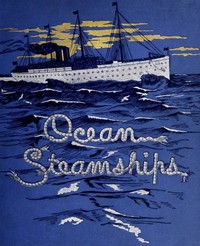
Ocean Steamships A popular account of their construction, development, management and appliances — A Reader’s Guide
(0 User reviews)
349
Project Gutenberg
2017
Not confirmed
Steam-navigation -- History; Steamboats; Steamboat lines
Readers of public-domain and historical texts
Project Gutenberg digital edition
en
Edition facts
Words
83,984
Reading time
366 min
Text sections
13
Ocean Steamships A popular account of their construction, development, management and appliances — A Reader’s Guide can be approached with a clearer sense of reading commitment from its source measurements: 83,984 words, 6 hr 6 min estimated reading time, and 13 detected text sections.
The text analysis averages about 23.7 words per sentence, while the detected sections provide another way to judge how the source is divided.
Project Gutenberg metadata also associates the work with “Steam-navigation -- History,” connecting these edition facts with the source record’s subject description.
Source:
Project Gutenberg record #54136
An 1891 collaborative work examining late-19th-century ocean steamships through technical, operational, and human lenses, with detailed accounts of construction, speed, passenger travel, and crew life, illustrated with 96 images.
Editorial Edition Score
4.9/5
★★★★★
★★★★★
Calculated from edition completeness, EPUB availability, text structure and catalogue metadata. Not a user rating.
How this score is calculated
- Description quality20 pts
- Title & short description10 pts
- Source metadata20 pts
- Text length15 pts
- Chapters / structure15 pts
- EPUB file integrity20 pts
Total of 100 points, scaled to a 2.5-5.0 range. Editions with an empty description or a missing EPUB file are not scored.
Edition quality
Read the Text
tons; New York had 77, of which 39 were of a large class, exceeding generally 300 tons—the largest was the President, of 615 tons, built in 1829. Liverpool had at this date 41 steamers; the largest was of 559 tons, 4 others exceeded 200 tons, and all the others were much smaller. London had 169, of which the largest was the British Queen, just built, of 1,053 tons; the next largest was of 497 tons. Glasgow and Belfast had been in regular steam communication since 1818; Glasgow and Liverpool, London and Leith, since 1822. The first ferry-boat on the Mersey, it may be noted, the Etna, 63 feet long, with a paddle-wheel in the centre, began her trips in 1816.
In 1819 the Atlantic was first crossed by a ship using steam. This was the Savannah, of 380 tons, launched at Corlear’s Hook, New York, August 22, 1818.[2]
She was built to ply between New York and Savannah as a sailing-packet. She was, however, purchased by Savannah merchants and fitted with steam machinery, the paddle-wheels being constructed to fold up and be laid upon the deck when not in use, her shaft also having a joint for that purpose. She left Savannah on the 26th of May, and reached Liverpool in 25 days, using steam 18 days. The log-book, still preserved, notes several times taking the wheels in on deck in thirty minutes.
In August she left Liverpool for Cronstadt. An effort was made to sell her to Russia, which failed. She sailed for Savannah, touching at Copenhagen and Arendal, and arrived in 53 days. Her machinery later was taken out, and she resumed her original character as a sailing-packet, and ended her days by being wrecked on the south coast of Long Island.
But steam-power had by 1830 grown large enough to strike out more boldly. The Savannah’s effort was an attempt in which steam was only an auxiliary, and one, too, of a not very powerful kind. Our coastwise steamers, as well as those employed in Great Britain, as also the voyage of the Enterprise to Calcutta in 1825 (though she took 113 days in doing it), had settled the possibility of the use of steam at sea, and the question had now become whether a ship could be built to cross the Atlantic depending entirely on her steam power. It had become wholly a question of fuel consumption. The Savannah, it may be said, used pitch-pine on her outward voyage, and wood was for a very long time the chief fuel for steaming purposes in America. How very important this question was will be understood when it is known that Mr. McGregor Laird, the founder of the Birkenhead firm, in 1834, laid before the Committee of the House of Commons on Steam Navigation to India the following estimate of coal consumption:
Under 120 horse-power, 10-1/2 lbs. per horse-power. 160 „ 9-1/2 „ „ 200 „ 8-1/2 „ „ 240 „ 8 „ „
Or more than four times what is consumed to-day in moderately economical ships. In other words, to steam at her present rate across the Atlantic the City of New York, of 18,000 horse-power, would need to start with something like 7,500 tons of coal on board were her consumption per indicated horse-power equal to that of the best sea practice of that date, which could hardly have been under 6 pounds per indicated horse-power per hour.
This may be said to have been the status of affairs when, in 1836, under the influence of Brunei’s bold genius, the Great Western Steamship Company was founded as an off-shoot of the Great Western Railway, whose terminus was then Bristol. Brunel wished to know why the line should not extend itself to New York, and the result of his suggestion was the formation of the steamship company and the laying down at Bristol of their first ship, the Great Western.
Brunel’s large ideas were shown in this ship, though in comparatively a less degree, as well as in his later ones. She was of unprecedented size, determined on by Brunel as being necessary for the requisite power and coal-carrying capacity. The following were her principal dimensions: Length over all, 236 ft.; length between perpendiculars, 212 ft.; length of keel, 205 ft.; breadth, 35 ft. 4 in.; depth of hold, 23 ft. 2 in.; draught of water, 16 ft. 8 in.; length of engine-room, 72 ft.; tonnage by measurement, 1,340 tons; displacement at load-draught, 2,300 tons.
Dimensions of engines: Diameter of cylinders, 73-1/2 in.; length of stroke, 7 ft.; weight of engines, wheels, etc., 310 tons; number of boilers, 4; weight of boilers, 90 tons; weight of water in boilers, 80 tons; diameter of wheel, 28 ft. 9 in.; width of floats, 10 ft.
This 1891 volume assembles six authors—naval officers, engineers, and journalists—to produce a multi-perspective account of ocean steamships at their zenith. Unlike a single-author treatise, the book shifts from Commander Chadwick's historical survey of steam propulsion to A. E. Seaton's technical analysis of speed and engine efficiency, then to William H. Rideing's on-the-ground description of shipbuilding yards along the Clyde. The excerpts reveal a work that balances engineering detail with human narratives: the chapter on passenger travel by John H. Gould recounts the first ocean race and clipper-era accommodations, while later sections examine the lives of officers and crew, noting the inadequate pay and rigorous drills. The catalog subjects—steam-navigation history, steamboats, steamboat lines—accurately frame the content, but the excerpts also show a strong emphasis on labor conditions and organizational hierarchy, particularly in the treatment of deck officers and stokers.
Engineering and Construction Detail
The book's technical chapters ground abstract concepts in concrete practice. A. E. Seaton's discussion of speed defines terms like “coefficient of fineness” and “indicated horse-power” while tracing the shift from compound to triple expansion engines. He notes that the introduction of Siemens-Martin steel in 1875 was “the chief factor in the success of modern fast steamers,” a specific material innovation that enabled lighter, stronger hulls. William H. Rideing's account of shipbuilding describes the “mould loft” where plans are enlarged, the “scrive board” for laying out lines, and the process of “fairing the ship.” He quantifies a typical yard as covering seventy-four acres and employing seven thousand workmen. These details align with the catalog subject of civil engineering, but the excerpts also reveal the authors' interest in the economic scale: Rideing opens his chapter with “the cost of an ocean racer” and the “intricate financing” behind it, linking engineering to business.
Life and Labor Aboard
A substantial portion of the excerpts focuses on the human element, particularly the officers and crew. The text describes junior officers as coming from “all sorts and conditions of men,” many having “fought their way” through training-ship apprenticeships. It notes that on transatlantic liners, half the officers hold masters' certificates and junior naval reserve commissions. The author criticizes steamship corporations for paying officers inadequately, stating that “in no other trade or profession is equal ability so badly paid.” The description of a fire drill shows the crew's motley composition: “grimy greasers and stokers rush from below; stewards hop about; butchers, bakers, and electric-light-makers rally.” The captain times the response, achieving a three-minute average. This section goes beyond the catalog subjects of steamboats and lines to examine social hierarchy and working conditions, a theme not explicitly listed but prominent in the text.
Historical and Comparative Context
The book situates late-19th-century steamships within a longer history. Commander Chadwick's opening chapter traces the “slow growth of the idea of steam propulsion” from early models to Fulton's Clermont, the 1819 voyage of the Savannah, and the first Atlantic crossings by Sirius and Great Western in 1838. He covers the founding of the Cunard Company, the invention of the screw propeller, and the rise and fall of the Collins Line. A. E. Seaton provides a comparative table of fast steamers from 1836 to 1890, charting advances in speed and coal consumption. The chapter on passenger travel contrasts “the old clipper days” with modern state-rooms. These historical sections align with the catalog subject “steam-navigation—history,” but the excerpts also show the authors using history to argue for progress: Seaton frames the decrease in coal consumption and increase in speed as a narrative of improvement, while Chadwick's account of the Great Eastern and the “beginning of great rivalry in speed” sets the stage for contemporary competition.
Readers approaching this work should note its collaborative structure: each author brings a distinct expertise, and the chapters can be read independently. The excerpts suggest that the book is richest when it combines technical exposition with firsthand observation, as in Rideing's shipyard tour or the fire-drill scene. The catalog subjects accurately capture the engineering and historical focus, but the text also offers unexpected insights into labor practices and corporate accountability. For a full understanding, consider how the authors' backgrounds—naval, engineering, journalistic—shape their perspectives, and note that the 96 illustrations likely complement the written descriptions of machinery and vessels.
Holding this 1891 Ocean Steamships volume, my mind drifted to my grandfather’s tales of sailing to Ellis Island—the trembling faith in iron hulls. It reminded me of another old manual, Concrete Construction for the Home and the Farm — Reading Notes, whose pages smelled of mortar and quiet certainty. Both books whispered about building homes upon the uncertain water or solid ground, promising permanence.
There are no reviews for this eBook.
There are no comments for this eBook.
Reader reflection
How did this book work for you?
Your answers remain private and are stored only in this browser.
Your progress
0
/
10
2
Was reading this book enjoyable?
3
Would you recommend this book to another reader?
4
How demanding did the text feel?
5
Did it raise ideas you would like to talk about?
6
How understandable was the text?
7
How would you describe its reading pace?
8
What was the strongest part of the book?
9
Which lesson or insight stayed with you?
10