1

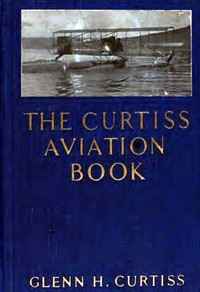
The Curtiss Aviation Book — Story, Setting & Ideas
(0 User reviews)
1075
Project Gutenberg
2021
Not confirmed
Airplanes
Readers of public-domain and historical texts
Project Gutenberg digital edition
en
Edition facts
Words
71,407
Reading time
311 min
Text sections
19
Before opening The Curtiss Aviation Book — Story, Setting & Ideas, the edition data offers a quick orientation: 71,407 words, 5 hr 11 min estimated reading time, and 19 detected text sections.
The text analysis averages about 26.1 words per sentence, while the detected sections provide another way to judge how the source is divided.
Project Gutenberg metadata also associates the work with “Airplanes,” connecting these edition facts with the source record’s subject description.
Source:
Project Gutenberg record #66511
This editorial note examines how the opening, middle, and later excerpts of Glenn Curtiss's 1912 aviation book guide a first reading, focusing on the interplay between personal narrative, technical instruction, and forward-looking speculation.
Editorial Edition Score
4.8/5
★★★★★
★★★★★
Calculated from edition completeness, EPUB availability, text structure and catalogue metadata. Not a user rating.
How this score is calculated
- Description quality20 pts
- Title & short description10 pts
- Source metadata20 pts
- Text length15 pts
- Chapters / structure15 pts
- EPUB file integrity20 pts
Total of 100 points, scaled to a 2.5-5.0 range. Editions with an empty description or a missing EPUB file are not scored.
Edition quality
Read the Text
how to prune and tie vines and gather fruit and at harvest time he was often seen with pony and wagon making a fast run to the station to get the last load of grapes on the train.
With the care of his sister and the work on the home vineyard, life was not all play, for Glenn was "The Man of the House," after his father's death, which occurred when he was four years old. At this time, he went with his mother and sister, to live with his grandmother who lived on the outskirts of the village.
Hammondsport is divided by the main street, and the boys of the two sections, like the boys in cities, were always at war. The factional lines were tightly drawn and many were the combats between the up-town boys and the low-town boys. The hill boys had a den in the side of a bank that sloped down from Grandma Curtiss' yard, walled in with stones of a convenient size. This gave them good ammunition and a great advantage in time of battle.
Among the members of the up-town gang were, "Fatty" Hastings and "Short" Wheeler, "Jess" Talmadge and "Cowboy" Wixom and Curtley, as the boys called Curtiss. He was captain of the band, because he had a sort of ownership of the den. Thus the war waged until one day they punctured Craton Wheeler's dog "Pickles," which so infuriated the enemy of the lower village that they were on the point of storming the fort in the hillside from above, and would no doubt have done so had they not chanced to trample upon Grandma Curtiss' flower beds which caused this indignant lady to issue forth and put the entire gang to rout. The cave continued to be a safe refuge for the hillside gang until "Fatty" Hastings grew too big to squeeze through the entrance and sometimes got stuck just as the gang was ready to sally forth against the enemy, or blocked the whole crew when they were in retreat.
During the winter months Glenn gave his hand to making skate-sails, and became very proficient at it, and when summer came and the boys went on bird-nesting excursions in the woods, he was usually the daring one who allowed himself to be lowered by a rope over the cliff's edge or climbed to the topmost limbs of the big hickory trees. At school, mathematics was young Curtiss's strong point, and when finally he came to pass his final examinations in the high school, he topped his class in that study with a perfect score of one hundred, and in Algebra he stood ninety-nine. It is reassuring, however, to find that in spelling he was barely able to squeeze through with a percentage of seventy-five. Glenn sometimes slipped up on the figuring, but the principle was usually right; he had figured that out beforehand. The boys of Hammondsport used to say that Glenn would think half an hour to do fifteen minutes' work. One wonders what they would have said, if they had been told that in after years he was to think and plan and scheme for a year, and then when he was all ready, to wait hour after hour, day after day, to accomplish something requiring a little more than two hours' time; like his flight from Albany to New York, the first great cross-country flight made in America.
When Curtiss was twelve years old his family went to live in Rochester, New York, so that his sister might be able to attend a school for the deaf at that place. He went on working at Rochester after school hours and during vacation time, first as a telegraph messenger, then in the great Eastman Kodak works, assembling cameras. He was one of the very first boys hired by that establishment to replace men at certain kinds of work, and while the men had received twelve dollars a week, Glenn received but four dollars. Before long, however, he had induced his employers to make his work a piece-work job, and had improved the process of manufacture and increased the production from two hundred and fifty to twenty-five hundred a day. He was thus able to earn from twelve to fifteen dollars a week. It was while employed in the camera works at Rochester that Curtiss saved the life of a companion who had fallen through the ice on the Erie canal. When praised for his act of bravery he simply remarked: "I pulled him out because I was the nearest to him."
The Curtiss Aviation Book opens with a dedication to Mabel G. Bell, acknowledging her role in the Aerial Experiment Association, and a table of contents that immediately signals a collaborative structure: Part I, written by Augustus Post, covers Curtiss's boyhood and early experiments; Part II and III are by Curtiss himself, detailing his first flights and major achievements; Part IV looks to the future with contributions from military officers; and Part V and VI offer practical flying advice and descriptions of Curtiss machines. This multi-voiced arrangement means the reader encounters not a single autobiography but a composite portrait, where Curtiss's own chapters are framed by others' perspectives.
The Opening: A Collaborative Frame
The book's opening pages establish a deliberate division of labor. The table of contents shows that Augustus Post, not Curtiss, writes the introductory chapter and the account of Curtiss's early life. This choice distances Curtiss from self-praise and lets a co-author establish his credentials. The dedication to Mabel Bell—who funded the Aerial Experiment Association—further roots the narrative in a specific patronage network. A first-time reader should note that the opening chapters are not Curtiss's own voice; they set the stage for his first-person accounts that begin in Part II.
Middle Excerpts: Curtiss's First-Person Voice and Technical Detail
In the middle excerpts, Curtiss writes directly about his flying experiences. He describes a moment during a race at Los Angeles when the wind puffed his eyelids “out like toy balloons,” a vivid sensory detail that conveys the physical realities of early flight. He also compares the stability of a fast-moving aeroplane to a pail of water swung overhead without spilling. These analogies are not merely colorful; they serve as instructional tools, helping a reader understand forces like centrifugal effect. The prose balances personal anecdote with technical explanation, a pattern that recurs throughout his chapters.
Later Excerpts: Safety, Skill, and the Future
Later in the book, Curtiss addresses safety directly. He acknowledges the newspaper reports of fatal accidents but argues that flying is safer than automobile racing because the air offers no obstructions, tire troubles, or skidding. He cites French government statistics to claim that fatal accidents per flight had dropped to one-tenth of earlier rates. He also praises the increased skill of aviators like Beachey and McCurdy, while distancing himself from “fancy” flying. This section reveals Curtiss's rhetorical strategy: he defends aviation's risks while promoting its progress, a dual message that shapes the book's persuasive undercurrent.
The Multi-Author Structure as a Reading Guide
The book's collaborative authorship is not merely a production detail but a structural clue for readers. Captain Paul W. Beck writes on military applications, Lieutenant Theodore G. Ellyson on naval training, and Hugh Robinson on operating a hydroaeroplane. These chapters offer distinct technical and institutional perspectives that complement Curtiss's own. A reader moving through the book should attend to shifts in voice and emphasis: Post's more literary style, Curtiss's direct engineer's tone, and the officers' formal reports. This polyphony enriches the historical record but requires the reader to adjust expectations from section to section.
Because the excerpts are incomplete, the reader cannot assess how the book's later parts—such as the description of the Curtiss motor or the list of pupils—connect to the earlier narrative. However, the available material suggests that The Curtiss Aviation Book functions as both a personal memoir and a technical manual, with its multiple authors offering complementary viewpoints. First-time readers may benefit from reading Curtiss's own chapters in Parts II and III first, then returning to the introductory material and the specialized chapters, to better appreciate the interplay between personal experience and collaborative expertise.
Flipping through The Curtiss Aviation Book, I kept noticing how its speculation about flight’s future felt like a quiet bridge, not a loud prediction. That unhurried blend of memoir and vision reminded me of the editorial notes in Pegasus — Edition Insights, where similar patient margins hold the same gentle wonder. Some books simply talk to each other across decades.
There are no reviews for this eBook.
There are no comments for this eBook.
Reader reflection
Before you leave, reflect on the book
Use these questions to collect your thoughts before moving on.
Your progress
0
/
10
2
What was your overall reaction to the book?
3
Would you encourage someone else to read it?
4
How much effort did this book require?
5
What was the strongest part of the book?
6
How clear did the writing feel?
7
How did the reading compare with what you expected?
8
How useful were the ideas in this book?
9
What did this book teach you most?
10